 comparison
Storm Damage or Wear and Tear: How to Tell the Difference
Last Updated: November 5, 2026
Quick Summary
Storm damage is sudden and usually shows clean, lighter-coloured fresh breaks, patchy damage on the windward side and debris near the roof. Wear and tear builds gradually over years, appears in several places at once and shows flaking, softened edges, moss and stains. A leak that appears straight after a storm usually points to storm damage.
- Storm damage comes from a single event, while wear and tear builds up slowly over years.
- Fresh storm breaks usually look lighter in colour than the weathered surface around them.
- Storm damage is often patchy and concentrated on the side facing the prevailing wind.
- Wear and tear shows as flaking, softened or curled edges, moss build-up and crumbling mortar.
- Photograph and date damage before any repairs, because permanent repairs can remove the evidence needed for an insurance claim.
Table of Contents
- Why Storm Damage and Wear and Tear Look So Similar
- Signs of Storm Damage on Your Roof
- Roof Wear and Tear Signs to Look For
- Documenting Roof Damage for Insurance
- Booking a Storm Damage Roof Inspection With CJU Roofing Specialists
- Frequently Asked Questions
This is a CJU Roofing Specialists article. For enquiries, visit cjuroofingspecialists.co.uk.
Why Storm Damage and Wear and Tear Look So Similar
When a roof starts leaking, the cause is not always obvious. A cracked slate, a lifted tile and a worn flashing can all look alike from the ground. Telling storm damage apart from wear and tear matters, because it decides what your repair costs, whether your home insurance will respond and what needs fixing first. CJU Roofing Specialists covers Edinburgh, East Lothian and Midlothian, and the two causes often sit side by side on the same property.
Storm damage is usually sudden. A gust of wind lifts slates, hail chips tiles or a fallen branch breaks a ridge. Wear and tear builds up slowly over years of rain, sun, frost and ageing materials. Both can end with water getting into your loft, so the leak alone does not tell you which one caused it.
Signs of Storm Damage on Your Roof
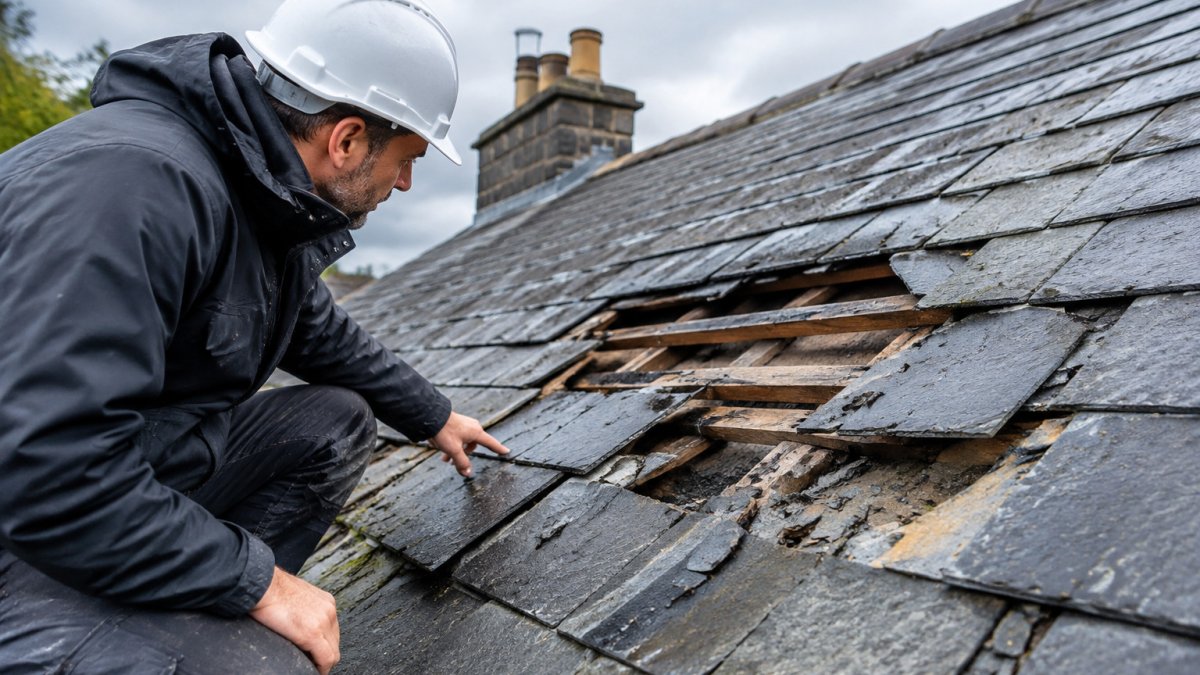
Storm damage tends to leave clear, recent evidence. Look for slates or tiles that are missing, displaced or cracked along a clean edge. Fresh breaks are usually lighter in colour than the weathered surface around them. Debris in gutters, dents in metal flashing or a fallen tree or branch near the roof point to a single event rather than gradual decline.
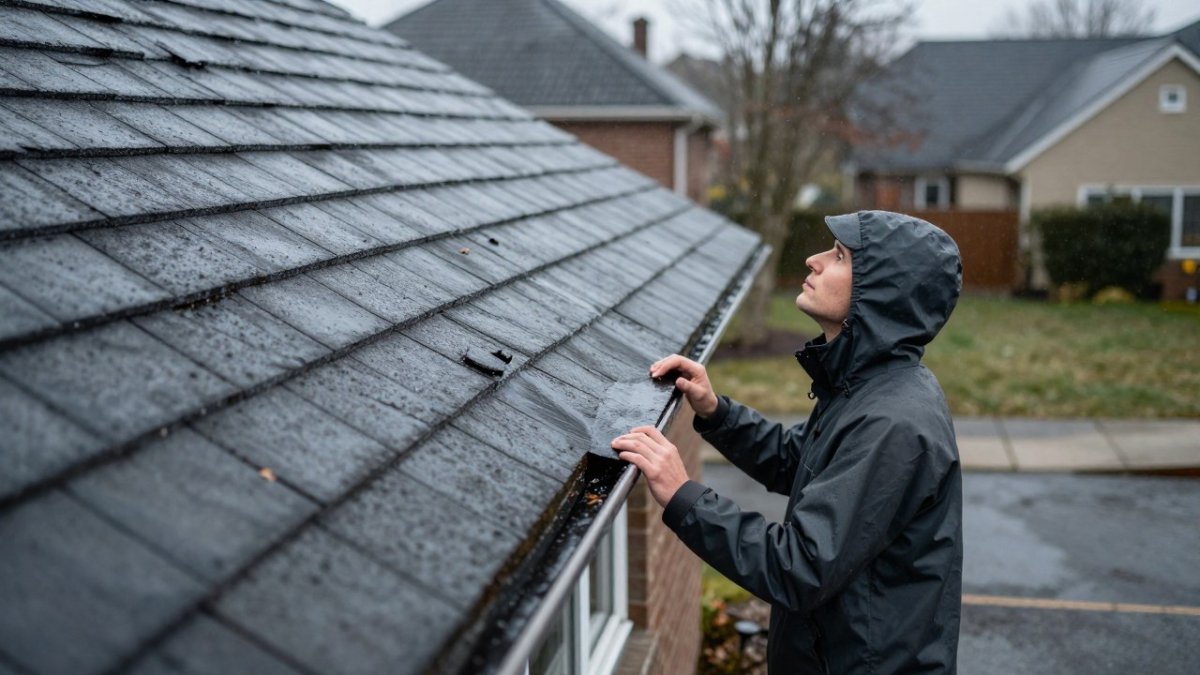
Storm damage also tends to be patchy. It often hits the side of the house facing the prevailing wind, while the opposite slope looks almost untouched. A roof that is damaged on one side and fine on the other is more likely to have been hit by a weather event.
Roof Leak After Storm: What It Usually Means
A leak that appears straight after a storm usually points to a single point of entry that the wind has opened up. It is often a displaced slate or a lifted flashing rather than a general failure of the roof. Water can travel along a rafter before it shows as a stain, so the spot on your ceiling may sit some distance from the actual breach.
If you find a leak after a storm, place a bucket to protect the room and take photos before anything is moved. To trace where the water is getting in and how to stop it spreading, see how to trace a roof leak before it spreads. Check the loft for wet insulation or dripping timbers. Do not climb onto a wet or damaged roof yourself, as it is unsafe. A professional inspection will trace the water path and separate the storm damage from any older faults.
The table below sets out the main differences between storm damage and wear and tear as described in this article.
| Sign | Storm damage | Wear and tear |
|---|---|---|
| Onset | Sudden, after a single event | Gradual, builds over years |
| Damage pattern | Patchy, often on the windward side | Spread along the roof, several places at once |
| Breaks | Clean, lighter-coloured fresh edges | Flaked, softened, delaminated or curled edges |
| Debris | Gutter debris, dented flashing, fallen branch | Moss and algae build-up |
| Leak signs | Leak appears straight after a storm | Stains in patches over time, damp insulation, musty smell |
| Typical cause | Wind, hail or fallen branch | Rain, frost, sun, wind and ageing materials |
Roof Wear and Tear Signs to Look For
Wear and tear is the slow deterioration of materials through normal exposure, rain, frost, sun, wind and thermal movement over many years. It is not a single event, and that is precisely why it is usually excluded from home insurance. The signs tend to appear gradually and in several places at once rather than in one clean break.
Look for moss and algae build-up, which holds moisture against the surface and can lift edges. Slates or tiles that have flaked, softened, delaminated or curled at the edges suggest the material has aged. Mortar at ridges and verges that has crumbled or cracked, failed pointing, perished flashings and corroded fixings are all classic wear indicators. Gutters that sag or overflow because of accumulated debris point to maintenance rather than storm.
Hidden leaks deserve particular attention. To learn how to catch them early, see spot signs of hidden roof leaks. Water stains that appear in patches over time, damp insulation, a musty smell in the loft or peeling paint on internal walls can all indicate a leak that has been running for months. Wear-related damage is usually spread along the roof rather than concentrated in one spot, which helps distinguish it from a storm event.
Age and exposure matter. An older roof that has been exposed for decades will show more wear under the same conditions as a newer one, and a roof approaching the end of its expected life is more vulnerable to any weather event. That is where mixed-cause damage becomes important: a storm can expose or worsen a pre-existing weakness, such as a hairline crack or a lifted slate that was already loose. In those cases the insurer will look at causation and policy wording, and may accept the storm-related element while excluding the underlying deterioration.
Watch out: do not assume that because a defect is old it cannot be storm-related, or that because a storm occurred every defect is covered, the two causes often sit side by side on the same roof.
If your roof is approaching the end of its expected life, minor storm damage can be the final trigger for a leak rather than the root cause. A professional inspection can separate the two and tell you what needs fixing first.
Documenting Roof Damage for Insurance
Good evidence makes a difference when you make a claim, but the evidence that matters is the evidence that speaks to causation.
Start with a dated photographic record. Photograph the damage from several angles, including close-ups of broken or displaced materials and wide shots showing where each defect sits on the roof. Keep the date and time stamp on every image, and where possible include a scale reference such as a ruler or a coin.
Record the weather event itself. Note the date and time of the storm and keep any local weather reports, Met Office warnings or news coverage that corroborate it.
Keep a simple claim timeline. List the date of the storm, the date you first noticed the damage, the date of any temporary repair, the date of the professional inspection and the date you notified your insurer. Preserve receipts for emergency repairs, temporary covers and any accommodation costs, and keep copies of every email, letter and phone note.
A dated professional inspection report can be useful evidence, because it describes each defect, its likely cause and the recommended repair, with photographs you can share. Ask the inspector to distinguish clearly between storm-related defects and pre-existing wear, rather than lumping everything together.
Watch out: do not carry out permanent repairs before the damage has been recorded and, where the insurer asks, inspected, doing so can remove the very evidence needed to prove causation.
For a fuller picture of what to gather before you call your insurer, see Roof Insurance Claim Evidence: What to Collect and Why. If water has already entered the property, you may also find guidance in Emergency Roof Repair Edinburgh: What to Do Now, which covers safe first steps and what to expect from an emergency callout.
Your policy wording sets the terms of cover, so read it carefully or ask your insurer to explain what it includes. Pay particular attention to the insured perils listed, the wear-and-tear and gradual-damage exclusions, and any condition requiring you to maintain the property and mitigate further damage.
Booking a Storm Damage Roof Inspection With CJU Roofing Specialists
If you are unsure whether your roof damage came from a storm or from wear and tear, a professional inspection is the most reliable way to find out. CJU Roofing Specialists offers regular roof inspections and maintenance across Edinburgh, East Lothian and Midlothian, and can help trace where water is entering and why.
A good inspection report describes each defect, its likely cause and the recommended repair, with photos you can share with your insurer. To see what a residential roof inspection covers and how to prepare for one, read Residential Roof Inspection Services in Edinburgh: What to Expect.
Pricing varies, so we recommend requesting a quote for an accurate figure. Enquire with CJU Roofing Specialists today to arrange an inspection and get a clear, documented answer on what is causing your roof damage.
Frequently Asked Questions
How can you tell if roof damage was caused by a storm?
Storm damage usually appears suddenly and is linked to a specific weather event, such as high winds, hail or a fallen tree. Look for slipped, cracked or missing slates and tiles that appear clean and fresh at the break, debris in gutters, and new leaks that began during or straight after a storm. Gradual deterioration tends to show weathered, rounded edges, moss growth, and damage that has built up over years. A roofer can assess the pattern and explain which cause fits best.
What counts as wear and tear on a roof?
Wear and tear is the gradual deterioration a roof experiences from age, weather exposure and lack of maintenance. Typical signs include worn sealants, lifted or brittle tiles, cracked flashings around chimneys, blocked gutters and water ingress that develops slowly over time. Because it builds up gradually, it is usually treated differently from sudden storm damage by insurers and in the terms of most home insurance policies.
What evidence should you collect after storm damage to your roof?
Take dated photographs of the damage from several angles, including close-ups of slipped slates or tiles and any internal staining. Keep notes on when the storm happened and when you first noticed the problem, and save any weather reports for that date. Retain receipts for emergency temporary repairs and keep a copy of your policy wording. Avoid discarding damaged materials until your insurer or inspector has seen them.
What should you do if your insurer says roof damage is wear and tear?
Ask the insurer for its reasons in writing and request a copy of the claim assessment. Arrange an independent roof inspection with a qualified roofing contractor who can document the condition and say whether the damage appears sudden or gradual. Share that report with the insurer and check your policy wording. If you still disagree, you can raise a formal complaint with the insurer and, if necessary, seek further guidance from an appropriate independent body.