 how-to
Emergency Roof Repair Edinburgh: What to Do Now
Last Updated: October 29, 2026
Quick Summary
Emergency roof repair in Edinburgh starts with stopping water from reaching the ceiling: place a bucket under the drip, switch off electrical fittings near the wet area, and keep people out of any room where the ceiling bulges or feels soft. Never climb onto a wet or damaged roof yourself. Then contact a roofer promptly and ask for a written inspection report.
- Place a bucket beneath the drip to protect the ceiling and floor.
- Switch off electrical fittings near the wet area, since water and power are dangerous together.
- Photograph the damage and ceiling before clearing up to help the repair and any insurance claim.
- Keep people out of the room if the ceiling bulges or is soft, as it can collapse without warning.
- Ask a roofer for a written inspection report describing the damage and repair.
Table of Contents
- Common Causes of Roof Leaks in Edinburgh Homes
- Temporary Roof Leak Repair and Safe Steps Before a Roofer Arrives
- Booking an Emergency Roofer and Arranging a Roof Inspection After Storm Damage
- Frequently Asked Questions
Common Causes of Roof Leaks in Edinburgh Homes
Emergency roof repair in Edinburgh usually starts with a leak that has been missed for weeks. The same culprits tend to recur: slipped or cracked slates, failed leadwork around chimneys and valleys, and blocked or sagging guttering that pushes water back under the roof covering. Wind-driven rain then finds the weak point.
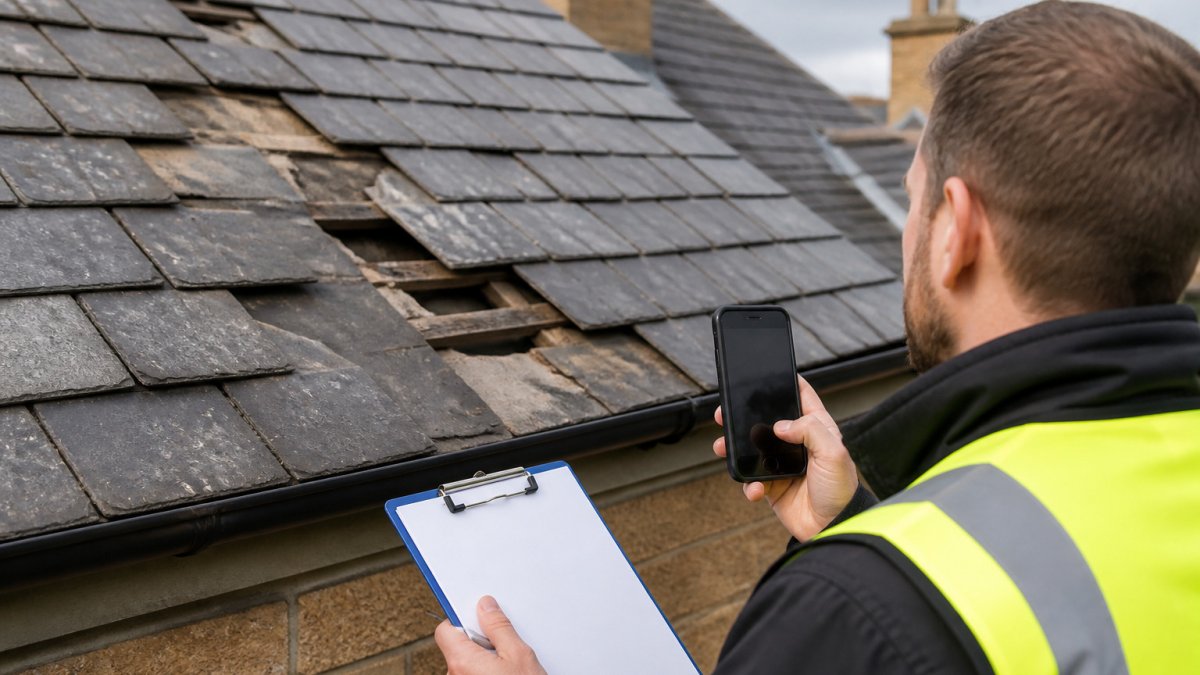
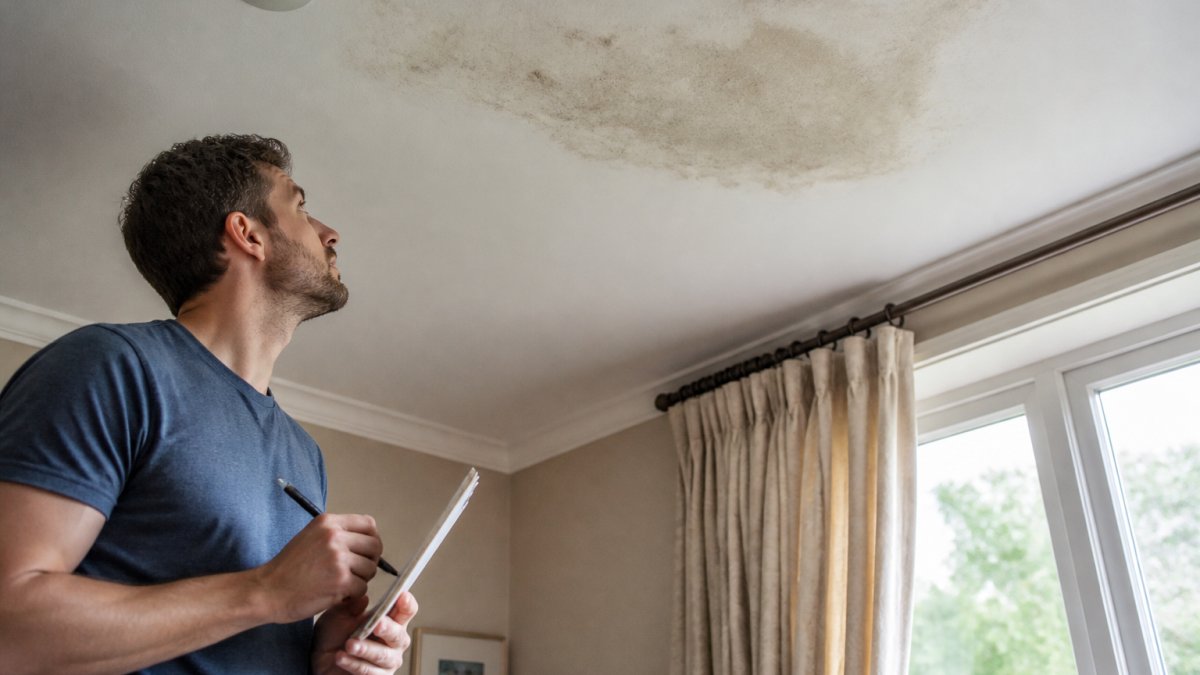
Hidden leaks are the hardest to spot. Learn how to spot signs of hidden roof leaks before the damage gets worse. A stain on a ceiling often shows up far from where the water actually gets in, so the source can sit several metres away. A professional roof inspection can catch problems like these that are easy to miss. A Scottish Government guidance on building maintenance is a useful starting point for understanding what routine upkeep should cover.
Temporary Roof Leak Repair and Safe Steps Before a Roofer Arrives
First, stop water reaching the ceiling and stay safe: move valuables, place a bucket beneath the drip, and switch off electrical fittings near the wet area. Never climb onto a wet or damaged roof yourself (Health and safety in roof work).
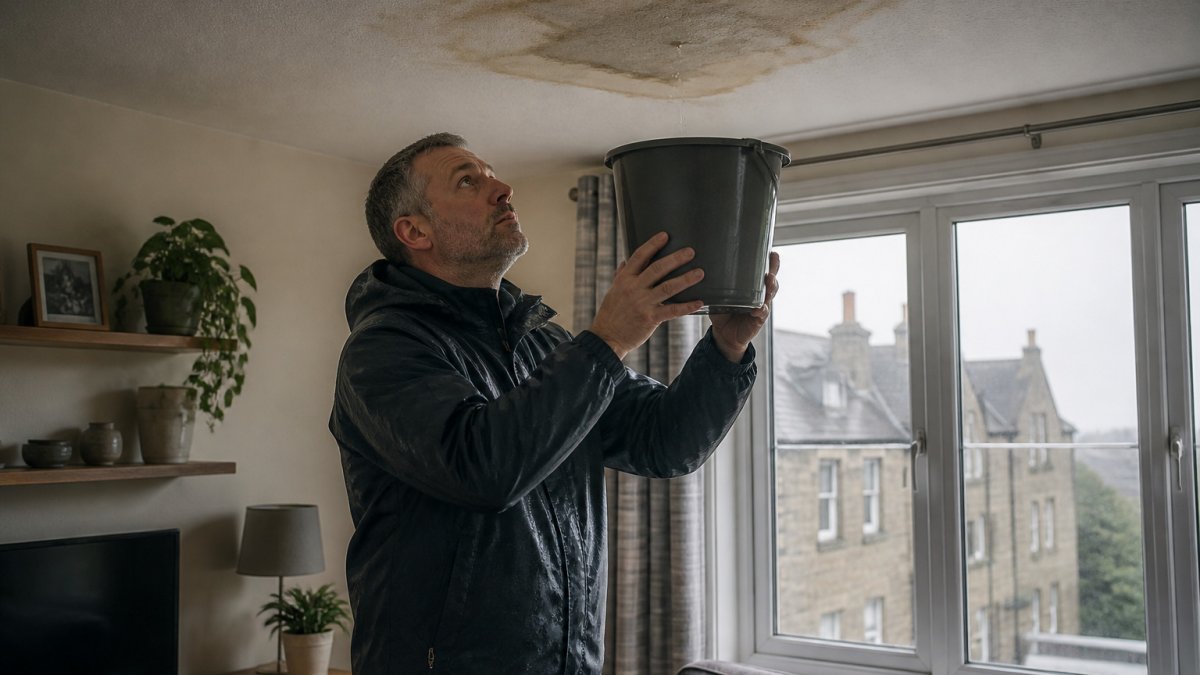
Photograph the damage and affected ceiling before clearing up, this helps with the repair and any insurance claim.
Watch out: a bulging or soft ceiling can collapse without warning, so keep people out of that room until checked.
The steps below summarise what to do before a roofer arrives.
| Step | What to do | Note |
|---|---|---|
| Stop the water | Place a bucket beneath the drip | Protects ceiling and floor |
| Stay safe | Switch off electrical fittings near the wet area | Water and power are dangerous |
| Protect belongings | Move valuables out of the affected room | Clear before the leak spreads |
| Document damage | Photograph the damage and ceiling before clearing up | Helps repair and insurance claim |
| Check the ceiling | Keep people out of the room if the ceiling bulges or is soft | It can collapse without warning |
| Avoid the roof | Never climb onto a wet or damaged roof yourself | Leave access to a roofer |
Booking an Emergency Roofer and Arranging a Roof Inspection After Storm Damage
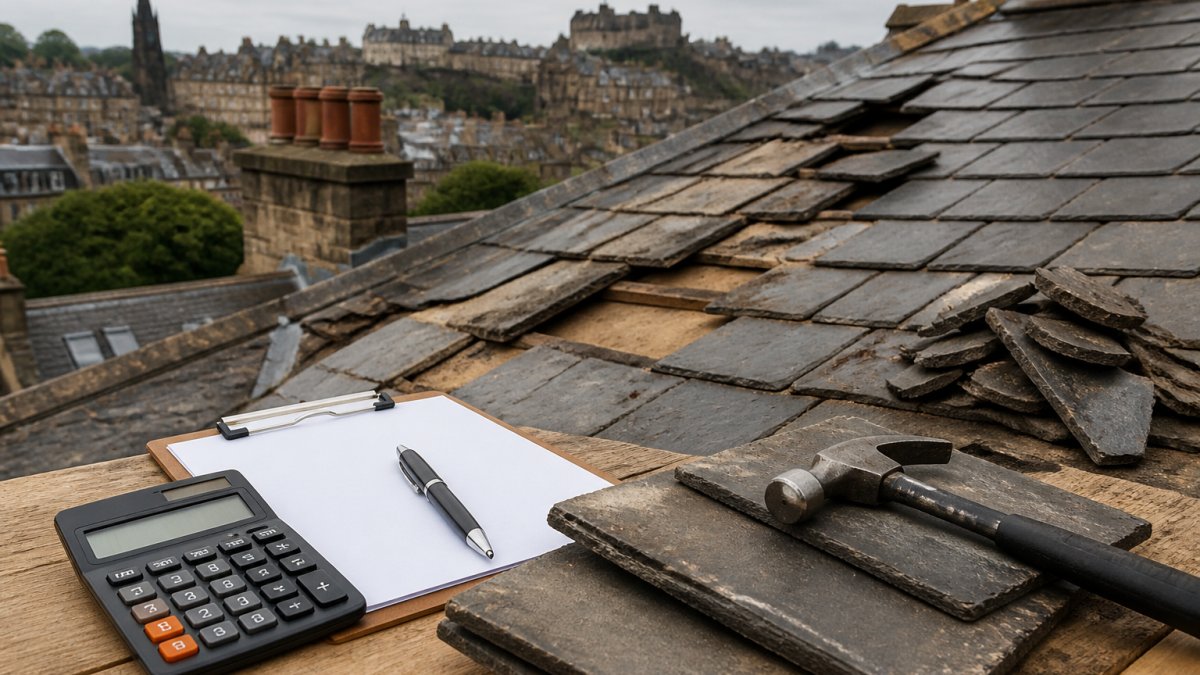
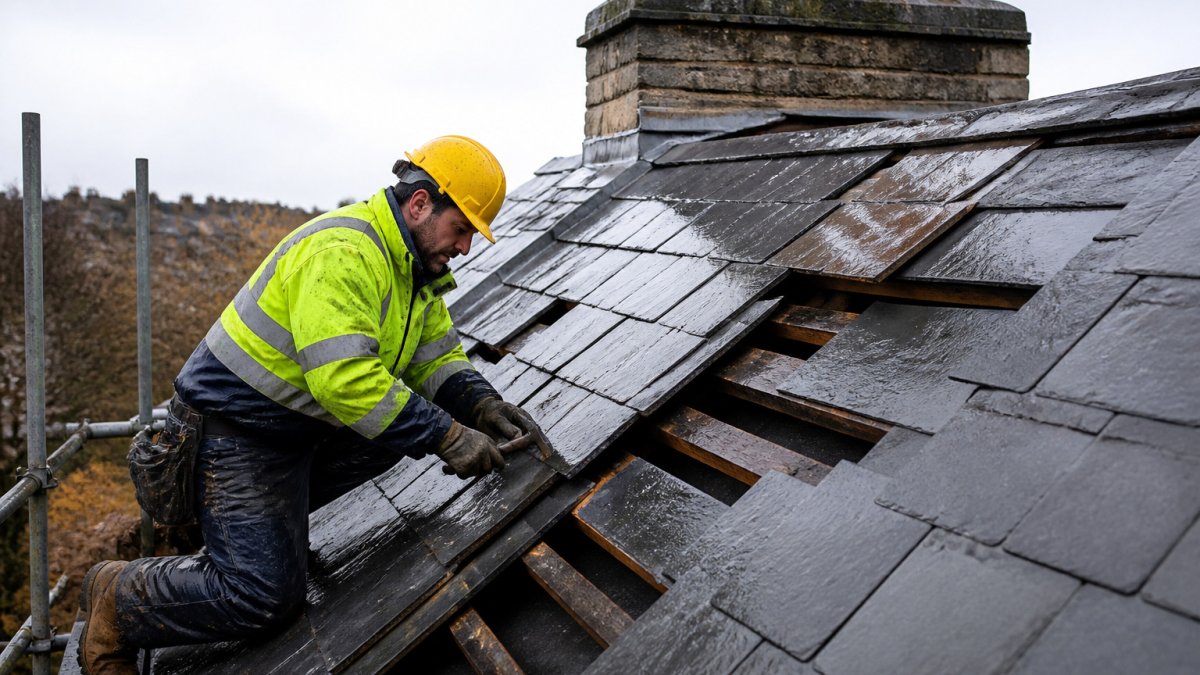
After storm damage, contact a roofer promptly and ask for a clear callout time; leaving the roof open can complicate a claim. You can see examples of completed roofing projects across Edinburgh and the Lothians. Get in touch with CJU Roofing Specialists to request a quote.
Ask for a written inspection report describing the damage and repair. Pricing varies, so request a quote from CJU Roofing Specialists.
Frequently Asked Questions
What should I do first if my roof starts leaking?
Move valuables and furniture away from the affected area, place a bucket or tarpaulin to catch water, and switch off electrics near the leak if water is reaching light fittings or sockets. Take photographs of the damage before anything is moved or cleaned up, as these will be useful for your insurer. Then contact CJU Roofing Specialists to arrange an assessment. Avoid going onto a wet or damaged roof yourself.
Will home insurance cover emergency roof repairs?
Many home insurance policies cover sudden damage caused by storms, but cover depends on your policy wording and the cause of the damage. Keep dated photographs, notes of the weather at the time, and any professional inspection report. Your insurer may ask for evidence that the damage came from a specific event rather than general wear over time. Check your policy or speak to your insurer before authorising major work.
Can I safely inspect a damaged roof myself?
A ground-level check is safe: look for missing or slipped tiles, damaged flashing, and staining on ceilings or walls, and photograph what you see. Climbing onto a roof, particularly after a storm or in wet weather, is dangerous and not recommended. A qualified roofer can carry out a roof inspection safely, and a written assessment of the damage is usually more useful for an insurance claim.