 how-to
Residential Roof Inspection Services in Edinburgh: What to Expect
Last Updated: October 30, 2026
Quick Summary
A residential roof inspection is a structured check of the roof covering, flashings, gutters and the areas where the roof meets walls, chimneys and skylights. It identifies existing damage and early warning signs before they become leaks or structural problems, and is usually visual, supported by close-up photographs and a look at the roof space where access allows.
- Inspectors check for slipped, cracked or missing slates or tiles, and lifted ridge and hip tiles.
- Leadwork around valleys, parapets and chimney stacks is checked, since lead is often where water first gets in.
- Natural slate and concrete or clay tile roofs need different checks, so the inspector notes the roof material.
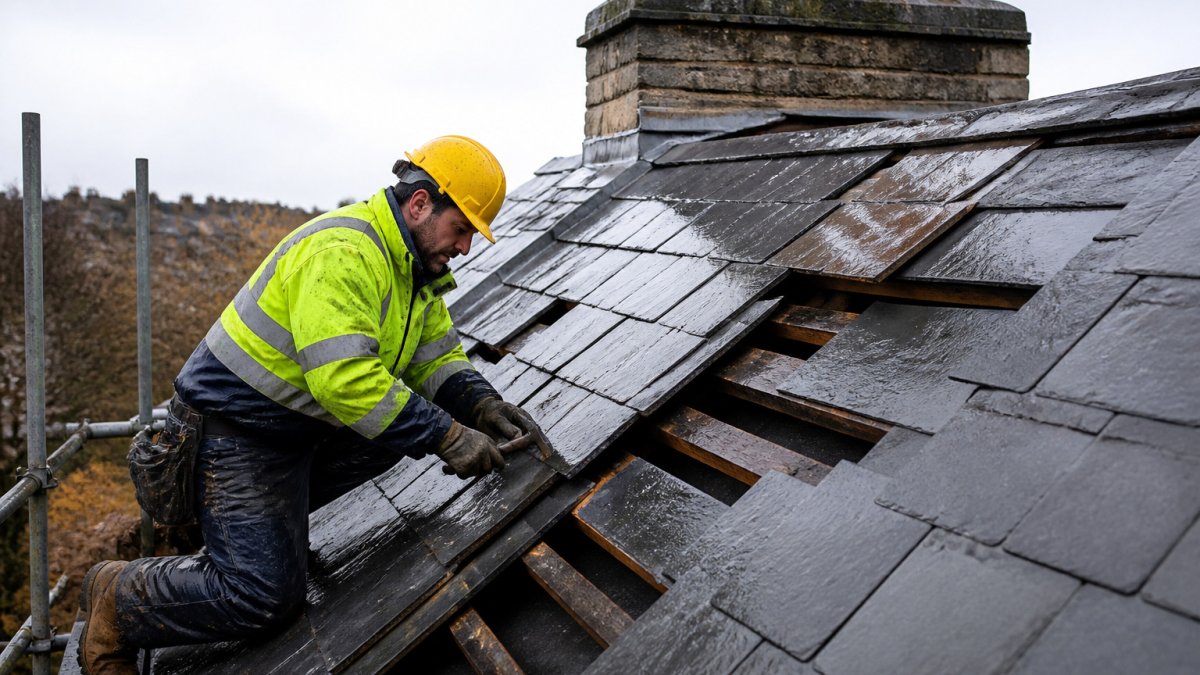
- Storm damage often appears as a patch of missing slates, because corroded nail fixings let slates lift and slip.
- Keep dated photographs of any defects, as they help compare changes over time and support insurance claims.
Table of Contents
- What a Residential Roof Inspection Covers
- Roof Inspection Checklist for Homeowners
- How to Find a Roof Leak From Inside
- Roof Inspection After a Storm: Edinburgh-Specific Risks
- How to Read Your Roof Inspection Report
- Booking Your Roof Inspection With CJU Roofing Specialists
- Frequently Asked Questions
Getting a roof inspection in Edinburgh is often the first sensible step after a storm, a damp patch or simply a roof that has reached middle age. At CJU Roofing Specialists, homeowners across Edinburgh, East Lothian and Midlothian ask the same questions: what happens during an inspection, what should they look for, and how do they make sense of the paperwork afterwards?
What a Residential Roof Inspection Covers
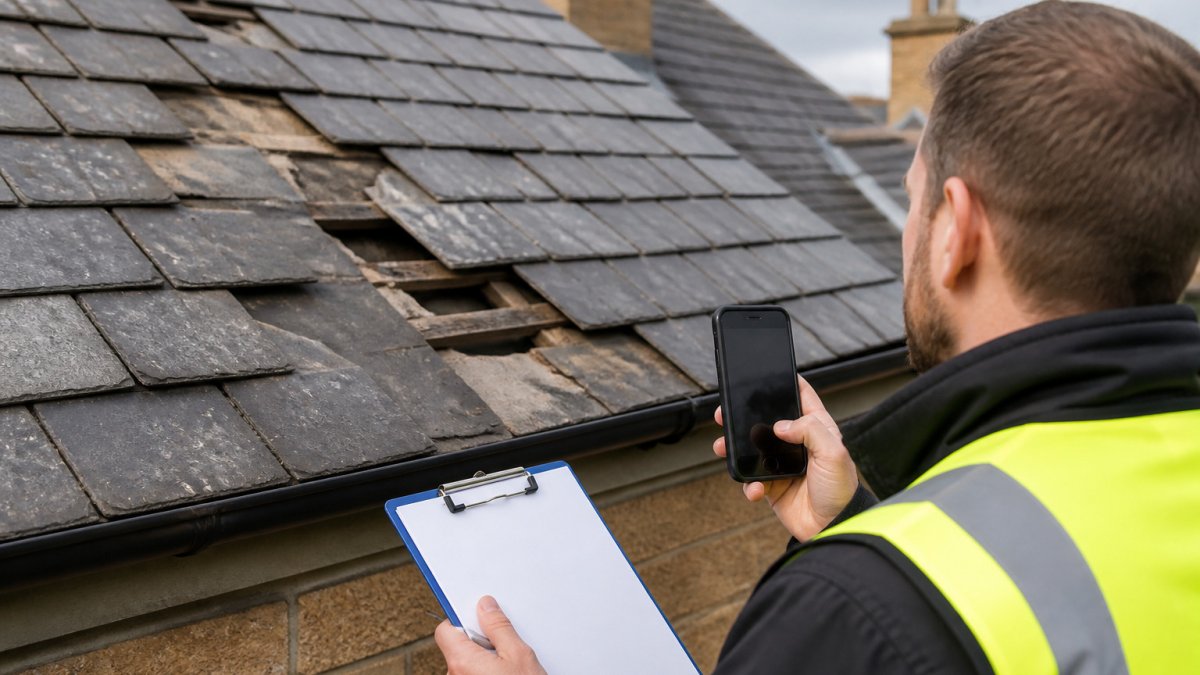
A residential roof inspection is a structured check of the roof covering, flashings, gutters and the areas where the roof meets walls, chimneys and skylights. Its purpose is to identify existing damage and early warning signs before they become leaks or structural problems. It is usually visual, supported by close-up photographs and, where access allows, a closer look at the roof space.
Roof Condition and Visible Defects
The inspector looks for slipped, cracked or missing slates or tiles, lifted ridge and hip tiles, and failing mortar or pointing. Leadwork around valleys, parapets and chimney stacks is checked for splits, lifting or corrosion, since lead is often where water first gets in.
Many homeowners notice a problem only once it has reached the ceiling. A good inspection catches it earlier, while the repair is still small.
Slate and Tile Roof Assessment
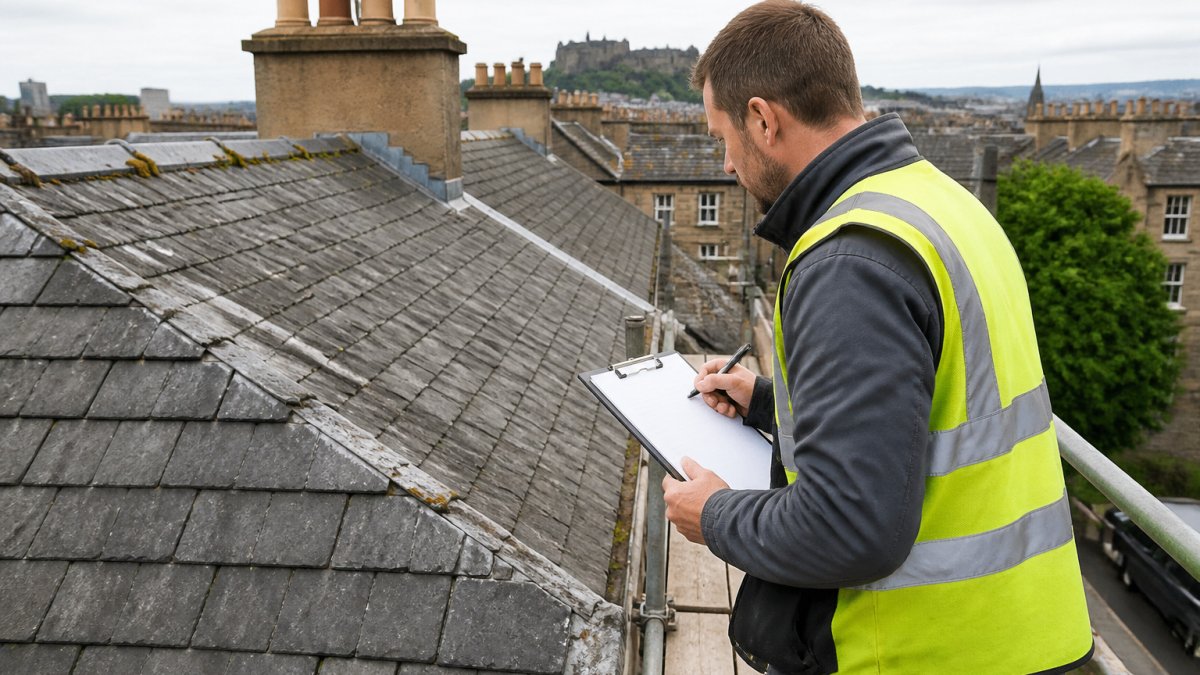
Edinburgh's older properties are often roofed in natural slate, and many newer ones in concrete or clay tile, and the two need different checks. Natural slate can delaminate, and nail fixings can corrode and loosen over time; tiles can crack, slip or be displaced by wind. A competent inspector will note the roof material, its approximate age and whether previous repairs used compatible materials, as mismatches often cause trouble later.
Roof Inspection Checklist for Homeowners
You do not need to be a roofer to spot warning signs between professional visits. Use this checklist once or twice a year, and always after severe weather:
- Look from ground level for slipped, missing or cracked slates and tiles
- Check ridges and hips for loose or displaced pieces
- Inspect chimney stacks for cracked pointing or lifted flashing
Keep dated photographs of anything you find. They help an inspector compare changes over time and are useful if you need to make an insurance claim.
How to Find a Roof Leak From Inside
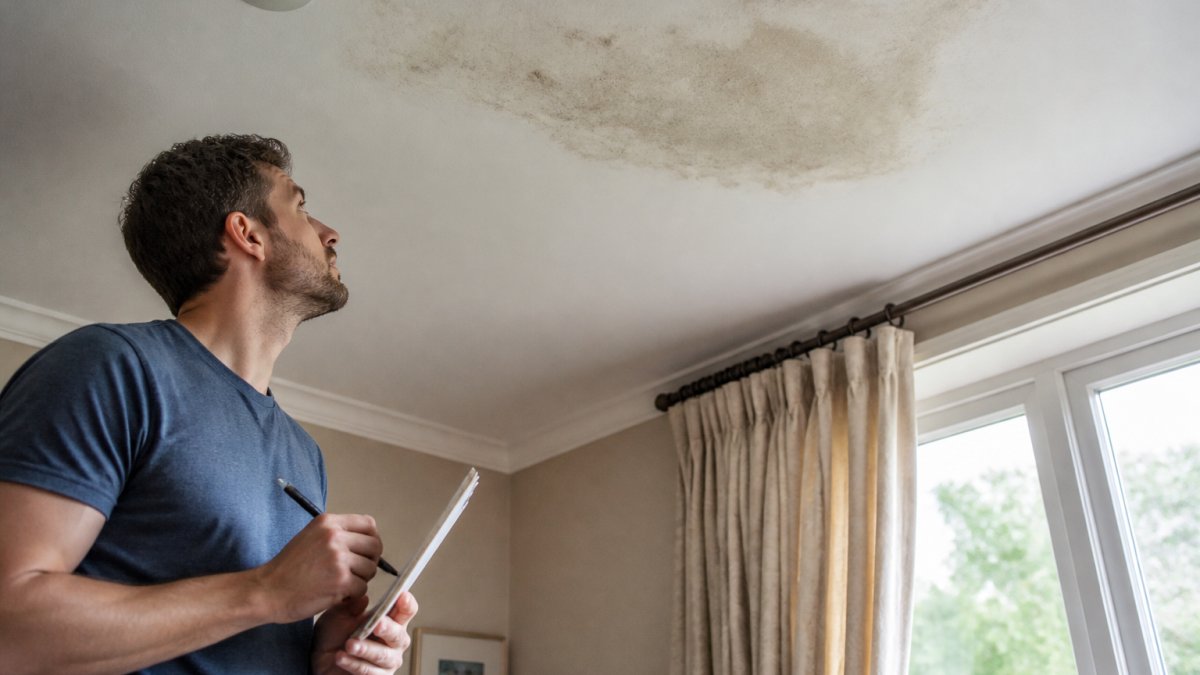
Leaks rarely appear directly beneath the entry point, because water travels along timbers and battens before it drips.
Ceiling stains with rings often show water has collected and dried repeatedly, and a musty smell can point to ongoing dampness even when no drips are visible. Our guide on spotting hidden roof leak signs covers water stains, damp insulation and musty odours in more detail.
Roof Inspection After a Storm: Edinburgh-Specific Risks
Storm damage is not evenly spread. The city's exposure to Atlantic weather, combined with its housing stock, means some roofs are far more vulnerable than others. Understanding why helps you decide how urgently to act.
Why older slate roofs suffer most
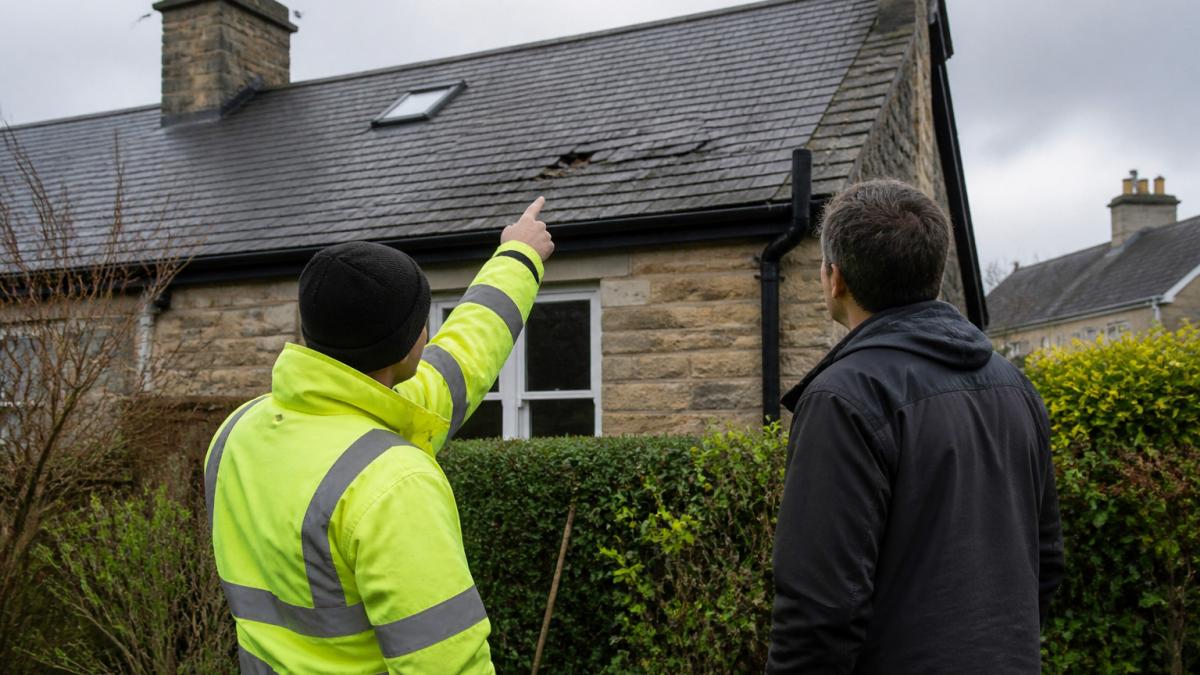
Much of the city's traditional housing is roofed in natural slate, often fixed with nails in place for decades. Wind rarely tears a sound slate off; it works on the fixings. Once a nail has corroded, a slate can lift and slip in a gust, leaving its neighbours unsupported, which is why storm damage often appears as a patch of missing slates, and why a roof that looked fine can lose several in one night.
Where the risk concentrates
Properties on exposed elevations and along the coast take the brunt of gusts, but damage can occur anywhere the roof is already weakened. Chimney stacks are a common weak point: cracked pointing and lifted flashing let driving rain in, and a loose pot or coping stone can become a hazard in high wind.
Conservation areas and traditional materials
If your property sits within a conservation area, repairs may need materials and methods that match the original roof, affecting what an inspector recommends and how quickly work can proceed (Planning and conservation areas). Check with the local planning authority before commissioning repairs, and ask your inspector to note whether the roof appears to fall within a conservation area.
What to check in the first 48 hours
After a storm, look from ground level for slates on the ground, displaced ridge or hip tiles, bent or detached gutters, and new damp patches on ceilings or in the loft. Do not walk on a damaged roof, a slipped slate can leave the covering unsafe underfoot (Roof work).
When to book an inspection
Book promptly if you can see missing slates, if water is entering, or if the roof is old and unchecked in recent years. Water through a storm gap can soak timbers and insulation within days, and the repair is usually far smaller if caught early. If nothing is visible but the roof is ageing, a routine inspection at the next convenient opportunity is sensible rather than urgent.
If you are unsure whether storm damage warrants a visit, get in touch with CJU Roofing Specialists and we can talk through what you have seen before anything is booked.
How to Read Your Roof Inspection Report
Most inspection reports follow a similar structure, but the value is in how you read it. A good report should let you make decisions without needing a roofer to translate it for you. Here is how to work through one, section by section.
Start with the summary and severity ratings
Reports usually open with a summary of findings. Read this first, then check whether each item carries a severity rating, commonly a three-tier system: urgent (defects already letting water in or likely to within the next storm), recommended (maintenance to plan within coming months) and monitor (areas to re-check next time).
Read the photographs against the notes
Photographs are the most useful part of a report, but only if captioned. Each image should show the defect clearly, state where on the roof it is and say what it means. Compare photographs with the written notes: a cracked slate is a defect, but the note should tell you whether it is isolated or part of wider nail fatigue.
Understand the language of defects
Reports use trade terms that are worth knowing:
- Delamination, the surface of a slate flaking away in layers, a sign of age rather than impact damage.
- Nail fatigue, fixings that have corroded and loosened, allowing slates to slip.
- Flashing, the metal or membrane that seals junctions, such as where a roof meets a chimney or wall.
If a term is not explained, ask. A report that leaves you guessing is not doing its job.
Match recommendations to actions
Each finding should come with a recommended action: repair, replace, monitor or no action required. Where repairs are recommended, ask for a bill of works, a written scope listing what will be done, where and in what order. This is what you compare when seeking quotes, and it prevents one contractor quoting for a small patch while another quotes for a full re-roof of the same area.
Check the scope and limitations
Every report should state what was and was not inspected. A visual inspection from ground level and a ladder cannot confirm the condition of every slate, and a loft inspection cannot see the outer face of the covering.
If anything in the report is unclear, ask the inspector to walk you through it. At CJU Roofing Specialists we are happy to talk through findings and what they mean for your property before you decide on any work.
The report's key terms and what each one tells you are summarised below.
| Term | What it means | Why it matters |
|---|---|---|
| Delamination | Slate surface flaking away in layers | Points to age rather than impact damage |
| Nail fatigue | Corroded, loosened slate fixings | Allows slates to slip |
| Flashing | Metal or membrane sealing roof junctions | Failure lets water in at joins |
| Pointing | Mortar between ridge or hip tiles | Failing pointing lets water in behind tiles |
| Battens | Timber strips the covering is fixed to | Staining here shows water is passing the covering |
Booking Your Roof Inspection With CJU Roofing Specialists
If you are concerned about your roof, the simplest next step is to get in touch. You can request a quote or book a roof inspection through our contact page, and we will confirm timings and what the visit will involve.
For a fuller picture of what an inspection includes and how often to have one, our guide on professional roof inspections explains the process in more detail.
Frequently Asked Questions
What does a residential roof inspection include?
A residential roof inspection is a structured check of the roof covering, flashings, leadwork, gutters, fascias and soffits, along with the visible condition of the roof structure where access allows. For slate and tile roofs, the inspector looks for slipped, cracked or missing slates and tiles, and checks how the ridges, hips and valleys are sealed. Many inspections also include close-up imagery of areas that cannot be seen safely from the ground. The output is a written condition report listing defects, their severity and recommended remedial work. Request a quote from CJU Roofing Specialists to confirm exactly what is covered for your property.
How often should a home roof be inspected?
Most homeowners benefit from a roof inspection at least once a year, and after any significant weather event such as high winds, heavy rain or snow. Older roofs, or roofs with a history of leaks, may need checking more often. Regular inspections catch small problems such as displaced slates, failing mortar or worn leadwork before they allow water into the loft or ceilings. An annual check also gives you a dated record of the roof's condition, which is useful when selling a property or making an insurance claim.
What should I do after receiving a roof inspection report?
Read the report's summary first, then the detailed findings. Note which items are marked as urgent and which are monitoring items. Ask the inspector or CJU Roofing Specialists to explain any defect you do not understand, and request a bill of works for the recommended remedial work so you can compare like with like. Prioritise urgent repairs to stop active water ingress, then plan the lower-priority items over the following months. Keep the report with your property papers.