 How-to
Emergency Roof Response Time Expectations in Practice
Last Updated: November 17, 2026
Quick Summary
An emergency roof response is measured in three different ways: call-back time, arrival time and repair time. Arrival depends on access, storm demand, hazard severity and weather, so ask which milestone is promised, and in writing, before booking.
- Call-back, arrival and inspection or repair are three separate timeframes that homeowners often confuse.
- Water reaching light fittings, sockets or the consumer unit is treated as immediate, same-day urgent.
- Active leaks into living spaces and storm-displaced slates or tiles are treated as priority, same or next day.
- A verbal promise to arrive within the hour is not a written arrival estimate, so confirm it in writing.
- Never climb onto the roof or into an unsafe loft to inspect or secure damage yourself.
Table of Contents
- What Counts as a Roofing Emergency
- Emergency Roof Repair Response Time: Call-Back, Arrival and Repair Are Different
- What to Do While Waiting for a Roofer
- Temporary Roof Repair After Storm Damage and Booking Your Emergency Visit
- Frequently Asked Questions
This is a CJU Roofing Specialists article. For enquiries, visit cjuroofingspecialists.co.uk.
What Counts as a Roofing Emergency
A roofing emergency is any roof problem that puts people, property or safety at immediate risk, water through the ceiling, slates or tiles blown off in a storm, or a loose chimney stack. Many need a fast temporary fix, even if the full repair can wait.
Check from the ground for missing slates, bent flashing or debris, and inside for fresh stains, drips or damp smells in the loft and top-floor rooms. You can learn how to identify storm roof damage and when a proper inspection is needed.
- Active leaks into living spaces
- Missing or displaced slates or tiles after a storm
- Loose chimney stacks or leadwork
- Storm debris resting on the roof or hanging over paths
- Water pooling in the loft after heavy rain
If you spot any of these, treat it as urgent. Keep people and pets away from the affected area and call a roofer.
Emergency Roof Repair Response Time: Call-Back, Arrival and Repair Are Different
Homeowners use "response time" to mean three different things, and the difference matters when water is coming in.
- Call-back time: how fast someone answers or returns your call.
- Arrival time: how long until a roofer reaches your property.
- Inspection and repair time: how long the assessment and the actual fix take once work starts.
A roofer may call back quickly but arrive later. A full repair often needs a return visit once materials are sourced and weather allows safe access.
What actually changes arrival time
Arrival estimates are usually driven by practical factors rather than a single promise:
- Travel distance and access, rural properties, restricted parking and narrow lanes add time.
- Simultaneous storm calls, after a named storm, every roofer in the area is triaging at once, and the most dangerous jobs are attended first.
- Severity of the hazard, water near electrics or a displaced chimney stack typically jumps the queue ahead of a minor slipped slate.
- Weather and daylight, high winds and darkness can delay safe roof access, even if a roofer is on site.
- Parts and access equipment, a temporary covering may need scaffolding or a tower, which takes time to arrange.
A severity-based guide to expected urgency
Use this to set expectations and describe the job clearly when you call. It is a guide, not a guarantee.
- Immediate (same day, treat as urgent): water reaching light fittings, sockets or the consumer unit; a ceiling bulging under the weight of water; a loose chimney stack or large section of leadwork over a path or door.
- Priority (same day or next day): active leak into a living space; missing or displaced slates or tiles after a storm; storm debris resting on the roof or hanging over access routes.
- Prompt (within a few days): water pooling in the loft after heavy rain with no sign of reaching electrics; damp smells and fresh stains on top-floor ceilings.
How to verify a response-time promise
A guarantee can mean acknowledgement, dispatch or on-site arrival, and the exclusions matter as much as the promise. When you book, ask:
- Does the guarantee cover the call-back, the arrival, or both?
- What exclusions apply, severe weather, simultaneous storm demand, access restrictions?
- Is the estimate in writing, and what happens if it is missed?
Watch out: a verbal "we'll be there within the hour" is not a written arrival estimate, so confirm which milestone is promised before relying on it.
When you book with CJU Roofing Specialists, ask for all three timeframes, call-back, arrival and repair.
The three timeframes homeowners often confuse are summarised below.
| Timeframe | What it means | Ask for it |
|---|---|---|
| Call-back time | How fast someone answers or returns your call | Confirm in writing |
| Arrival time | How long until a roofer reaches your property | Confirm which milestone is promised |
| Inspection and repair time | How long the assessment and fix take once work starts | Expect a return visit if needed |
What to Do While Waiting for a Roofer
Your safety comes first. Do not climb onto a roof or into an unsafe loft to inspect damage. You can read the safe immediate steps and what to expect from a callout while you wait.
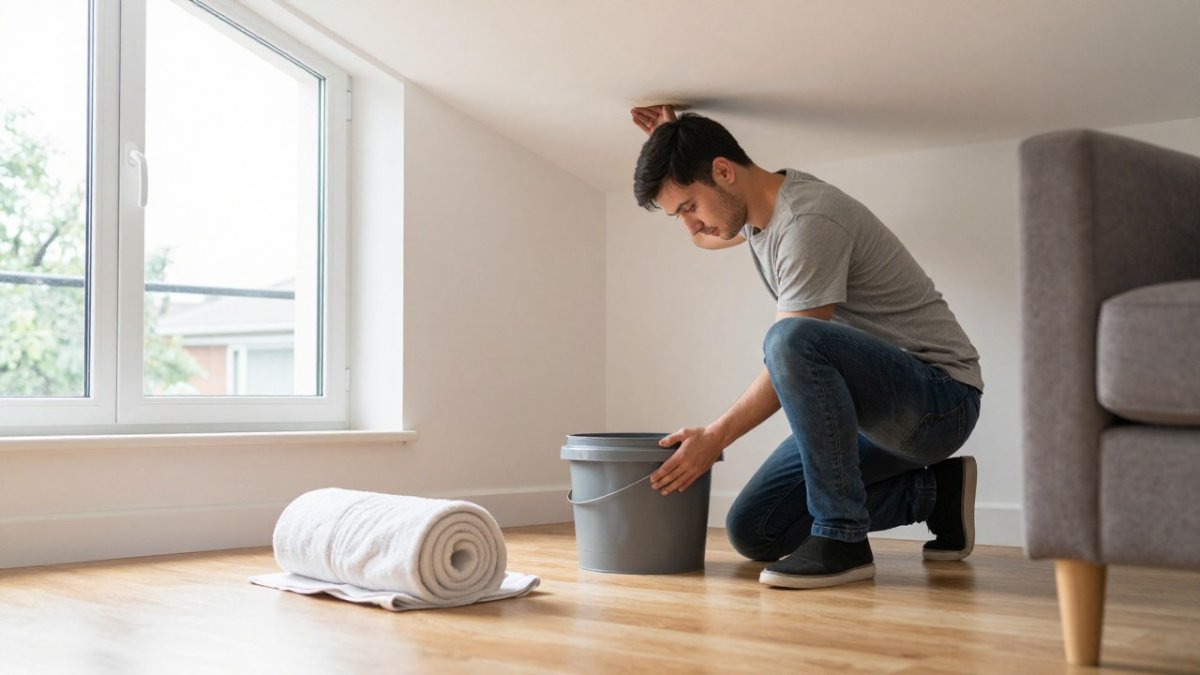
Take these steps while you wait:
- Move valuables away from drips and place a bucket under the leak.
- Photograph the damage inside and out, with dates where possible.
- Switch off electrics near any water reaching light fittings or sockets.
- Clear the area beneath the damage so people can walk safely.
- Note the weather so you can tell the roofer what happened and when.
Keep your photos and notes together. They help with the roofer's assessment and any insurance claim.
Temporary Roof Repair After Storm Damage and Booking Your Emergency Visit
A temporary repair stops water getting in and makes the roof safe until a full repair. It does not replace the permanent work. Before arranging a fix, you can check the visible signs of storm damage to look for.
What to have ready before you call
Being organised speeds up the whole process:
- A clear description of the damage and where it is on the roof.
- Whether water is entering the property, and where.
- Photos taken inside and out, with dates where possible.
- Any inspection notes or previous repair estimates you hold.
Questions to ask when booking
- What are your call-back, arrival and repair timeframes, and are they in writing?
- Will you provide a temporary repair on the first visit, or is that a separate appointment?
- What evidence will you record for my insurer?
- What are the exclusions on any response-time guarantee?
- How will you make the roof safe, and what should I avoid in the meantime?
Documenting for an insurance claim
Keep your photos, notes and written estimates together. Insurers often ask for evidence of the damage, so confirm at booking what documentation you will receive. To prepare, you can see which photos and estimates to gather first.
Safe actions while you wait
Watch out: never attempt to secure sheeting or clear debris from the roof yourself, falls from height are a serious risk, and improvised fixes can make the damage worse.
To get help, contact CJU Roofing Specialists for an emergency visit. Ask for a quote to discuss next steps.
Frequently Asked Questions
How quickly should a roofer respond to an emergency?
Response expectations vary by provider and by the severity of the damage. A reputable roofer should acknowledge your call promptly and tell you when someone is likely to attend. Ask for three separate timings: when you will be called back, when an operative is expected to arrive, and when permanent repairs are likely to be scheduled. Severe damage such as an active leak or loose materials that could fall should be prioritised. Request a quote or contact CJU Roofing Specialists directly to discuss what response you can expect for your property.
Do emergency roofers respond at weekends?
Some roofing firms offer out-of-hours or weekend emergency cover, while others operate standard office hours. Weekend availability can also be limited after severe weather, when demand rises across a wide area. When you first make contact, ask directly whether weekend attendance is included and whether any additional charges apply. Keep a note of the time you reported the problem and the reference number you were given, as this helps if you need to chase the response.