 How-to
How to Emergency Patch a Roof Safely?
Last Updated: November 18, 2026
Quick Summary
How to emergency patch a roof? Start by making the area safe: never climb onto a wet or damaged roof. Contain drips inside, photograph the damage, then cover it from the ground with a heavy-duty tarpaulin secured with battens or sandbags, not nails. Call a professional roofer for anything out of safe reach.
- Do not climb onto a wet or damaged roof; slipping on wet slates is a common injury.
- Turn off electrics near the leak, especially lighting and sockets, before starting.
- Photograph the damage from several angles before changing anything, to support insurance claims.
- Secure the tarpaulin with battens or sandbags, since nails through tiles create new holes.
- Ask emergency roofers which response milestone their guarantee covers: call-back, arrival, inspection or repair.
Table of Contents
- How to Emergency Patch a Roof: Safety First
- Common Causes of Roof Leaks You Can Spot Quickly
- Step-by-Step: How to Emergency Patch a Roof
- Temporary vs Permanent Repairs and When to Call an Emergency Roofer
- Frequently Asked Questions
This is a CJU Roofing Specialists article. For enquiries, visit cjuroofingspecialists.co.uk.
How to Emergency Patch a Roof: Safety First
If your roof is leaking during a storm, act fast, but safety comes first: knowing how to emergency patch a roof? starts with making the area safe. The first rule for any roof emergency is simple: do not climb onto a wet or damaged roof. Stay on the ground, protect the inside of your home, and make the area safe before you touch anything.
Watch out: do not work on a roof in high winds, rain or darkness. Slipping on wet slates is the most common way people get hurt.
Before you start, check these points:
- Turn off electrics near the leak, especially lighting and sockets.
- Keep children and pets well away from the work area.
- Check the ladder is on firm, level ground and tied off at the top.
- Wear non-slip footwear and a harness if you have one.
- Ask someone to stand by while any work is done.
Common Causes of Roof Leaks You Can Spot Quickly
Most emergency leaks start in predictable places: slipped or cracked tiles, damaged flashing around chimneys and roof windows, and blocked gutters that push water back under the edge. Inside, watch for water stains on ceilings, damp patches on walls and a musty smell in the loft.
Water often travels along rafters before it drips, so the ceiling mark may sit well away from the real problem. A professional can trace hidden leaks properly, and our guide on how to spot signs of hidden roof leaks explains the warning signs to check from inside your home.
Step-by-Step: How to Emergency Patch a Roof
Once the area is safe, you can apply a temporary fix to stop water getting in. Work through these steps in order to learn how to emergency patch a roof?, and stop at any point if conditions worsen.
- Contain the water inside. Put a bucket or heavy sheet down to catch drips and protect floors. If water is pooling near a ceiling light or socket, switch off that circuit at the consumer unit first.
- Photograph the damage from several angles before you change anything, including wide shots of the room and close-ups of the ceiling stain. This helps with any insurance claim.
- Clear the loft if you can reach it safely. Move stored items away from the wet area and lay a sheet over anything you cannot shift.
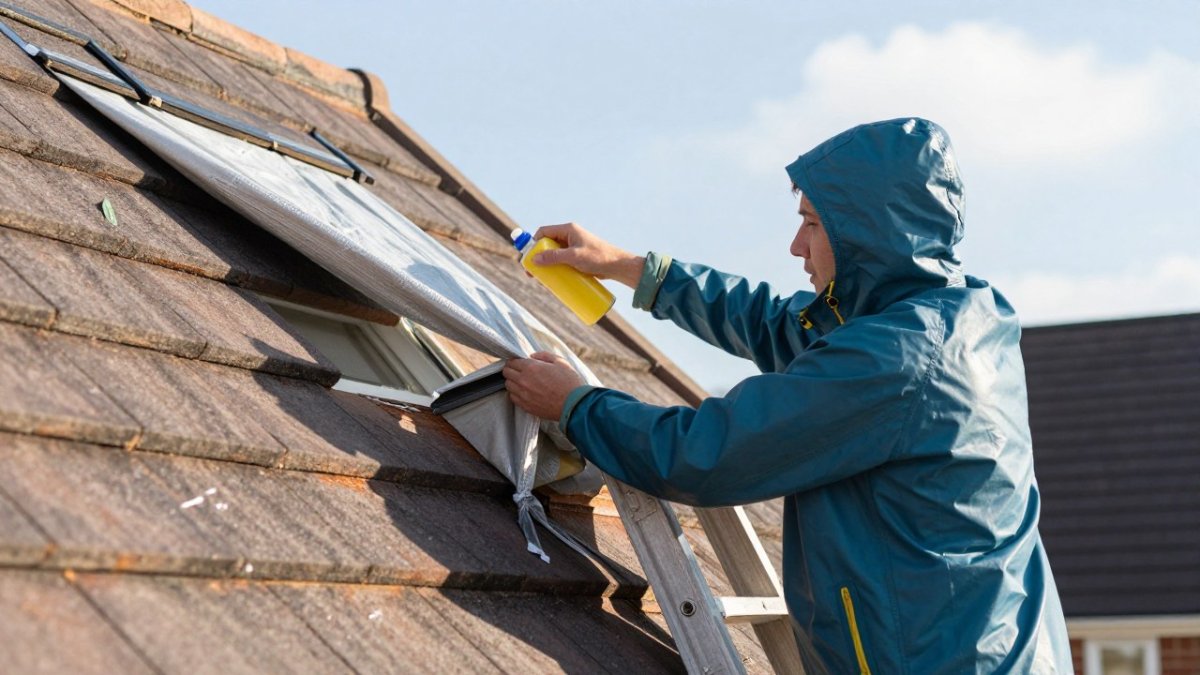
- Cover the damaged area from the ground where possible. Run a heavy-duty tarpaulin from above the damage down over the eaves so water sheds clear of the wall, then secure it with battens or sandbags rather than nails through the roof covering. Nailing through tiles or slates creates new holes and can void some insurance policies.
- Seal small gaps you can reach safely. Exterior roofing sealant works on the underside of loose or cracked tiles where you can reach them from a loft hatch or a stable ladder. Do not lean out over a pitched roof to reach a gap; the risk of a fall outweighs a small leak.
- Check the fix after the next storm. Inspect the covering from the ground and re-secure it if it has shifted.
Watch out: do not climb onto a wet or damaged roof to fit a tarpaulin. A temporary covering is not worth a hospital visit. If the damage is out of reach from the ground or a secure loft space, call a professional roofer rather than improvising.
Keep your evidence organised. Our guide on roof insurance claim evidence covers which photos, reports and estimates to collect before you call your insurer.
Temporary vs Permanent Repairs and When to Call an Emergency Roofer
A temporary patch buys you time, but it is not a permanent fix. Tarpaulins and sealant can fail in strong wind or heavy rain, so arrange a proper repair soon after. The useful question is not whether to call a roofer, but how urgently.
Separate the four response times
When you call an emergency roofer, ask them to be clear about four different milestones, because "response time" is often used loosely:
- Call-back time: how long before someone returns your call or message.
- Arrival time: how long before a roofer is on site.
- Inspection time: how long before the damage is assessed and you have a written view of what is needed.
- Repair time: how long before a permanent repair is completed, which may depend on materials and weather.
A fast call-back is not the same as a fast arrival. Ask which milestone any guarantee refers to, and what exclusions apply.
Judge urgency by hazard, not by noise
Use a simple severity guide to decide how quickly to act:
- Immediate danger: water near electrics, a sagging ceiling, or displaced materials hanging over a walkway. Keep people clear, switch off affected circuits and call for emergency help straight away.
- Active leak into the home: water is entering and damaging rooms or belongings. Call an emergency roofer as soon as you can and apply a temporary covering from the ground while you wait.
- Localised damp or a slow drip: the leak is contained and not near electrics. Arrange an inspection promptly, but a same-day call-out may not be necessary.
- Cosmetic or historic damage: no active water entry. Book a standard repair visit.
What to ask when booking
Keep a short checklist to hand so you can make decisions under pressure:
-
What is the estimated arrival time, and what does the call-out involve?
-
Will the roofer provide temporary protection on the first visit, or is that a separate job?
-
What is the likely follow-up repair, and when can it be scheduled?
-
Can they provide a written report for your insurer?
Pricing varies by job, access and time of day, so request a quote rather than relying on a headline figure. If you are unsure whether your insurance covers the repair, our guide on whether roof replacement is covered can help you check.
When to call a professional straight away
Call a professional roofer without delay if water is coming through the ceiling in more than one place, if tiles or flashing have clearly come away, if the roof structure looks sagging, or if the damage is near electrics. A professional roofer can talk you through the immediate steps and arrange an inspection.
The article separates four response milestones and sets out how urgency depends on the hazard involved.
| Milestone | What it means |
|---|---|
| Call-back time | How long before someone returns your call or message |
| Arrival time | How long before a roofer is on site |
| Inspection time | How long before damage is assessed and a written view is given |
| Repair time | How long before a permanent repair is completed |
If your roof is leaking now, do not wait for the weather to clear. Contact CJU Roofing Specialists for a prompt, expert assessment across Edinburgh, East Lothian and Midlothian. Enquire now.
Frequently Asked Questions
Can I patch a roof in the rain?
Only when the rain has eased and the roof is dry enough to work safely. Wet slates and tiles are slippery, and most temporary sealants will not bond to a damp surface. If water is actively coming in, protect the inside first by placing buckets and covering furniture, then secure a tarpaulin over the area from the ground or from a safe ladder position. Leave the permanent work for a dry spell and ask a qualified roofer to assess it.
How long does a temporary roof patch last?
A temporary patch is designed to stop water entering the property until a proper repair can be carried out, so it should be regarded as a short-term measure. Its lifespan depends on the materials used, the weather and how well it was fitted. Check it after every storm and arrange a permanent repair promptly, as a temporary fix left for months can hide further deterioration of the roof structure.
When should I call an emergency roofer?
Call an emergency roofer straight away if water is coming through a ceiling, if slates or tiles have been blown off, if there is sagging or damage to the structure, or if there is any risk of an electrical hazard near the leak. Contact a roofer before attempting work on a damaged roof if you are unsure about safety. Ask about their response times when you call, as arrival and repair times can differ.