 How-to
Roof Tile Repair Time: What to Expect From Start to Finish
Last Updated: November 19, 2026
Quick Summary
A single cracked roof tile repair usually takes one to two hours of hands-on work, often finished within one working day, weather permitting. Repairs covering a full slope can take one to three days on the roof, with total elapsed time running up to two weeks, depending on access, tile matching and the scope of damage.
- Replacing one cracked tile typically takes one to two hours on the roof.
- Two to five tiles on one slope usually need two to four hours, or one to three days in total.
- Hidden batten or underlay damage can add one to three days to the repair.
- Tile matching and weather are the main factors that delay a roof tile repair.
- Request a quote and an inspection for a reliable estimate for your roof.
Table of Contents
- How Long a Roof Tile Repair Usually Takes
- Replacing a Single Cracked Roof Tile: Time Breakdown
- How to Replace a Roof Tile Yourself and Where the Time Goes
- Factors That Lengthen Roof Tile Repair Time
- Stopping a Roof Leak Quickly While Repairs Are Scheduled
- Booking Your Roof Tile Repair With CJU Roofing Specialists
- Frequently Asked Questions
This is a CJU Roofing Specialists article. For enquiries, visit cjuroofingspecialists.co.uk.
How Long a Roof Tile Repair Usually Takes
The honest answer to "how long does roof tile repair take?" depends mostly on how much of the roof is affected. A single cracked tile can often be sorted in a few hours. A larger section of damaged tiles may need several days.
Most guides blur two different numbers: the time a roofer is actually on the roof with tools in hand, and the total elapsed time from your first call to the job being signed off. Both matter, and they are rarely the same. The table below sets out realistic ranges by repair scope, with hands-on time and total elapsed time shown separately.
| Repair scope | Hands-on time on the roof | Typical total elapsed time |
|---|---|---|
| One cracked or slipped tile | 1 to 2 hours | Same day to 3 days, depending on scheduling and tile matching |
| Two to five tiles on one slope | 2 to 4 hours | 1 to 3 days |
| A small section or patch (roughly 6 to 20 tiles) | Half a day to a full day | 2 to 5 days |
| A full roof slope or large area | 1 to 3 days | 3 days to 2 weeks |
| Repair that uncovers batten or underlay damage | Adds 1 to 3 days | Often 1 to 3 weeks |
A few patterns sit behind those ranges. One or two tiles are usually a half-day booking because setup, access and cleanup take as long as the tile work itself. A small section often stretches to one to three days once access, tile supply and weather are factored in.
It also helps to separate a tile repair from a retile or full roof replacement. A single tile repair is measured in hours; retiling a slope is measured in days; a full roof replacement is measured in weeks.
Because every roof is different, the most reliable estimate comes from an inspection.
Replacing a Single Cracked Roof Tile: Time Breakdown
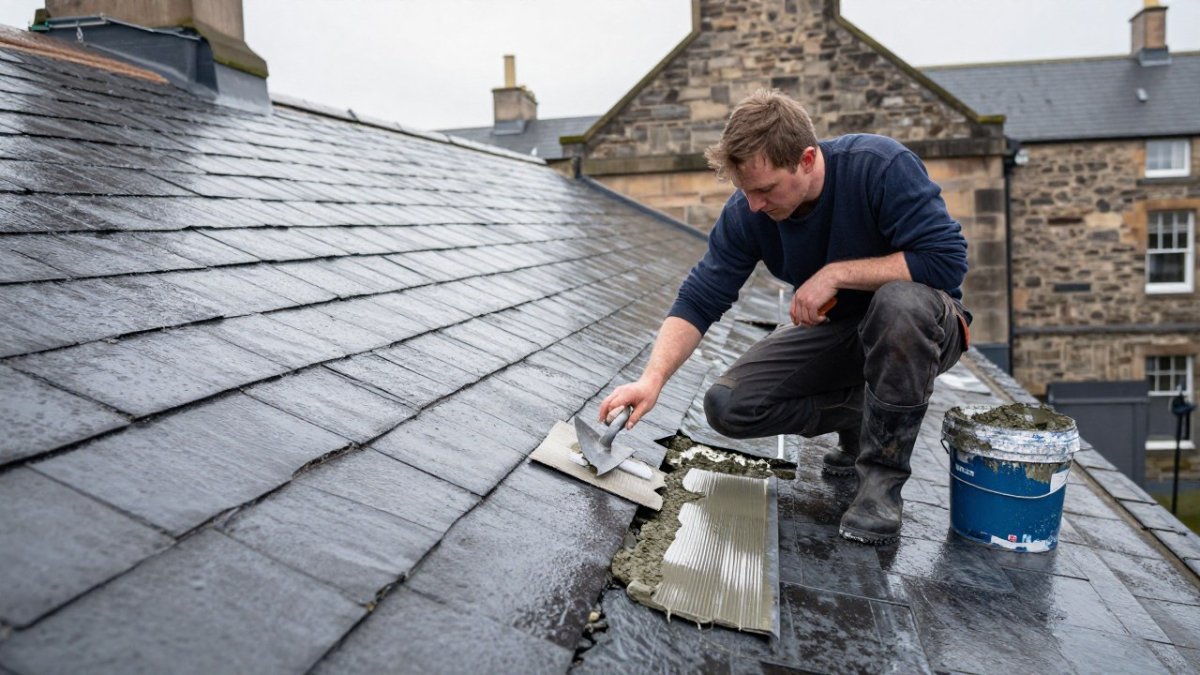
Replacing one cracked tile is usually among the quickest repairs. Most of the time goes on careful removal rather than fitting the new piece. Tiles are often interlocked, so lifting the damaged one without breaking its neighbours takes patience.
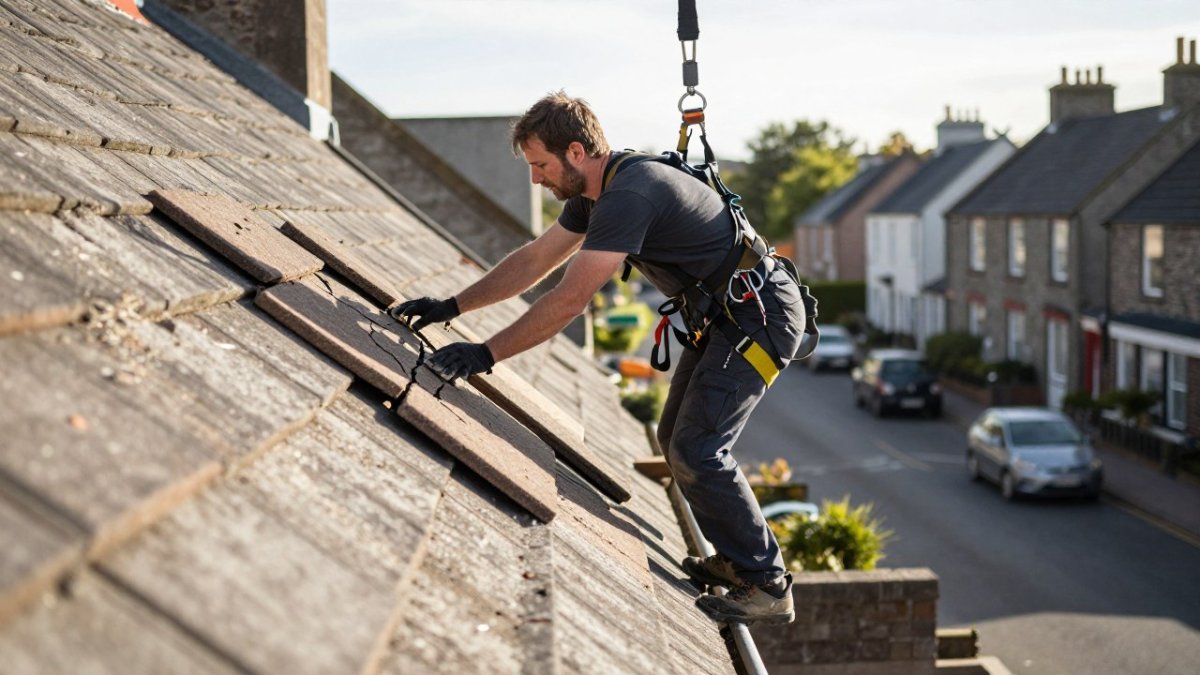
A cracked tile can be a problem even when it looks minor.
- Inspection and setup: Under an hour.
- Removing the broken tile: Often 30 to 60 minutes, depending on how tightly it is locked in.
- Fitting the replacement: Usually under an hour, once the right tile is found.
- Checking the surrounding tiles: Roughly 30 minutes.
The biggest variable is tile matching. If the original tile is no longer made, finding a close match can take longer than the repair itself.
Step-by-Step Repair Timeline
Here is what a typical single-tile repair looks like from start to finish:
- Assess the damage (about 30 minutes). Check the cracked tile, the tiles around it, and the underlay beneath.
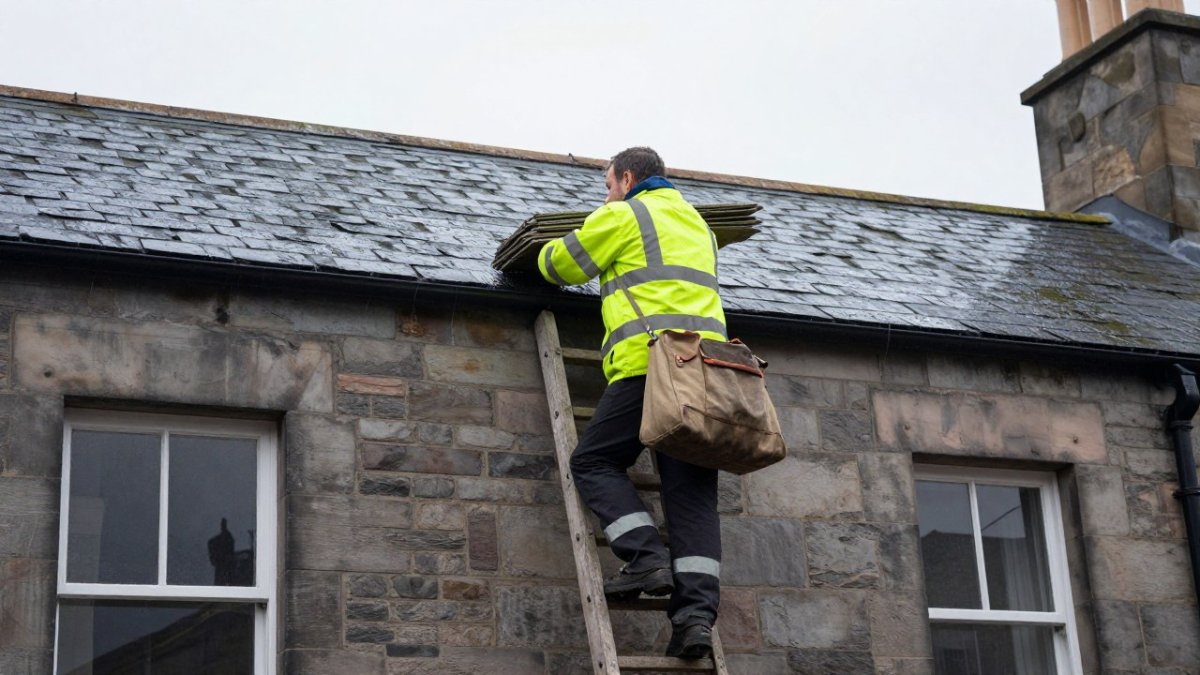
- Secure access (30 to 60 minutes). Set up ladders or scaffolding safely.
- Remove the damaged tile (30 to 60 minutes). Work carefully to avoid cracking neighbouring tiles.
- Fit the replacement (under an hour). Make sure it sits level and is properly secured.
- Final check (about 30 minutes). Look over the repair and clear the work area.
Single-tile repairs can often be done within one working day, weather permitting.
How to Replace a Roof Tile Yourself and Where the Time Goes
Some homeowners want to tackle a single tile themselves. It can be done, but it is worth knowing where the time really goes. Working at height carries real risk, so this is a task where caution matters more than speed.
If you do attempt it, expect the following:
- Gaining safe access often takes longer than people expect.
- Finding a matching tile can mean several trips to suppliers or reclaim yards.
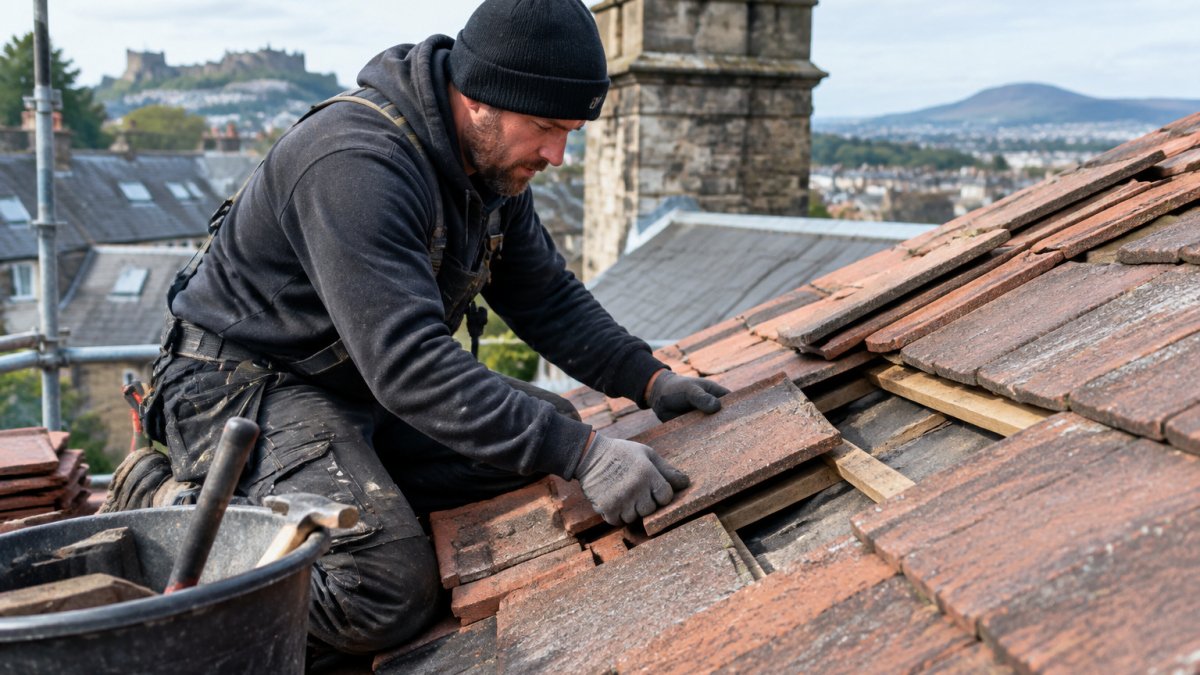
- Lifting the old tile without damaging the ones around it is the trickiest part.
- Re-fixing and checking the new tile takes more care than it first appears.
Many people underestimate how long a DIY job takes. A repair that a roofer completes in an hour can easily stretch across a full weekend. If you are unsure about access, tile type, or height, it is usually safer and quicker to call a professional.
Factors That Lengthen Roof Tile Repair Time
Several factors can stretch a repair beyond the initial estimate. Knowing them in advance helps you plan, and it also helps you judge whether a quoted timeframe is realistic.
- Weather: Rain, wind or frost can stop work for hours or days. Tiles and mortar also need suitable conditions to be fitted properly, so a cold snap or a wet week can push a job back rather than just slow it down. Watch out: bedding mortar that goes off in the cold may need redoing, which adds time on a second visit.
- Roof pitch: Steep roofs need extra safety equipment, such as roof ladders or scaffolding, and take longer to work on safely. The steeper the pitch, the more of the job is spent on access rather than the tile itself.
- Roof height and access: A two-storey roof with clear ground for ladders is quicker than a roof hemmed in by a conservatory, hedge or narrow passage. Where scaffolding is needed, the erection and dismantling can add a day or more to the total elapsed time even though the tile work is short.
- Tile availability: Older or unusual tiles may need sourcing from a reclaim yard or a specialist supplier, which can add days or weeks. If the original tile is no longer made, a close match may need to be found and checked for fit before the repair can go ahead.
- Scope of damage: What starts as a single tile can reveal problems with battens or underlay once the area is opened up. That discovery is the biggest single cause of a job running longer than quoted, because it turns a tile swap into a structural repair.
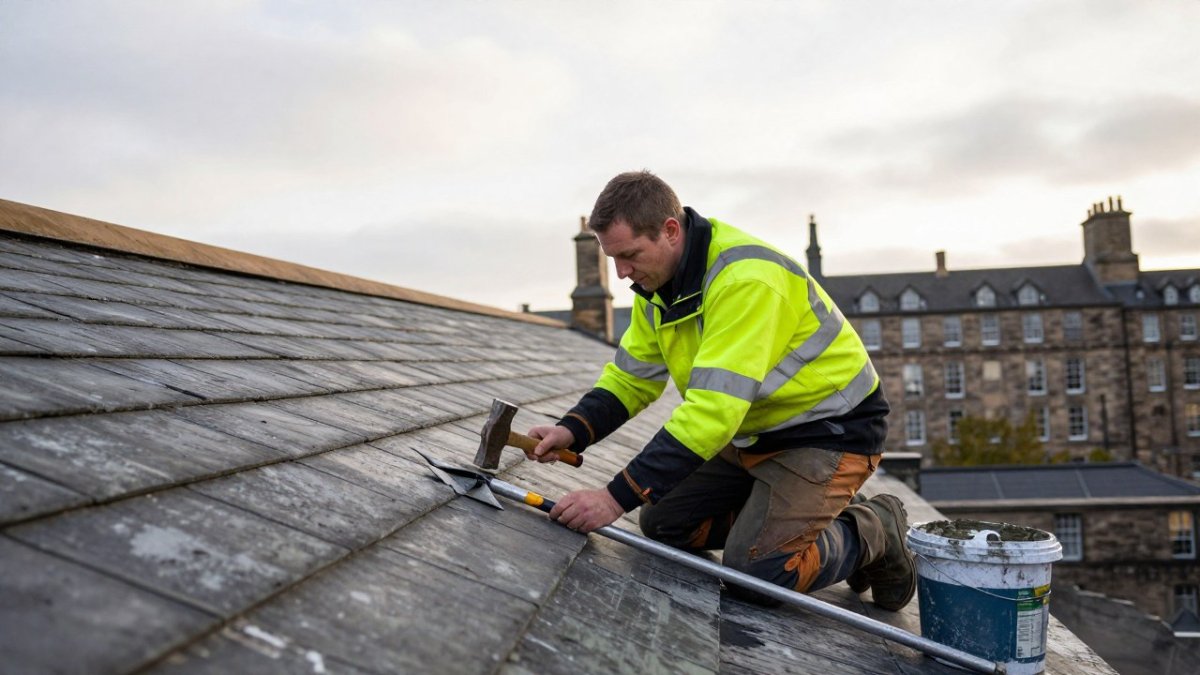
- Mortar or bedding work: Repairs that involve re-bedding ridge tiles or re-pointing take longer than a simple swap because the mortar has to be mixed, applied and left to cure.
- Scheduling and season: Demand rises after storms and in the run-up to winter, so the wait for a slot can be longer than the work itself. Booking ahead of the busy period usually shortens the total elapsed time.
Planning ahead for these factors makes it easier to keep expectations realistic. When you request a quote, it is worth mentioning the roof height, any access restrictions and whether the tiles are original, because each of those changes how long the job is likely to take.
Stopping a Roof Leak Quickly While Repairs Are Scheduled
If a cracked or missing tile is letting water in, a leak can cause damage inside the property while you wait for a repair slot. Acting quickly limits the harm.
- Move valuables and furniture away from the affected ceiling or wall.
- Place buckets or containers under drips and check them regularly.
- Take photos of any damage, which will help if you need to make an insurance claim.
- Avoid going onto the roof yourself during wet or windy weather.
Temporary measures only buy time. A proper repair is what stops the leak for good, so it is worth booking one as soon as possible.
Booking Your Roof Tile Repair With CJU Roofing Specialists
Getting a repair booked is simpler when you know what to expect. Describing the damage clearly, including roughly how many tiles are affected and whether there are any leaks inside, helps when enquiring. Photos can be useful.
Pricing depends on the size and type of repair, access, and materials, so please request a quote for an accurate figure. When comparing quotes from different roofers, check that each one lists the work clearly and explains how long it will take.
To get started, get in touch with CJU Roofing Specialists via https://cjuroofingspecialists.co.uk/ to enquire.
Roof damage rarely waits for a convenient time, so the sooner a cracked or missing tile is repaired, the less likely it is to cause bigger problems. CJU Roofing Specialists offers prompt, reliable repairs across Edinburgh, East Lothian and Midlothian.
Frequently Asked Questions
How long does it take to replace a roof tile?
Replacing a single cracked or broken tile usually takes an experienced roofer somewhere between thirty minutes and two hours, including removing the damaged tile, fitting the replacement and securing it. Most of the time is spent on access and making sure the new tile sits flush with its neighbours. If a matching tile is not readily available, the job can take longer while the right replacement is sourced. For guidance on your roof, contact CJU Roofing Specialists via https://cjuroofingspecialists.co.uk/ to enquire.
Can a broken roof tile be repaired in one day?
Yes, in most cases a single broken roof tile can be repaired within one day, often within a few hours. Larger jobs involving several tiles or a section of the roof may take longer, and weather can push work back. If the roof needs scaffolding or the replacement tile has to be ordered, the repair may stretch over more than one visit. A roofer can confirm the realistic timescale after inspecting the damage.
What affects how long roof tile repairs take?
Several factors shape the timescale, including how many tiles are damaged, how steep the roof is, how easily the area can be reached, and whether suitable matching tiles are available. Weather is a major factor because wet or windy conditions can make safe working at height impossible. The age and condition of the surrounding tiles also matter, as brittle tiles can crack during removal and add extra work.
Does replacing several roof tiles take much longer than replacing one?
Replacing several tiles takes longer than a single tile, but the difference is often less than people expect because access and setup are the main time costs. Once the roofer is in position, additional tiles in the same area can usually be swapped relatively quickly. Larger sections, however, may need a more involved repair, and the timescale will depend on the extent of the damage. Get in touch with CJU Roofing Specialists for an assessment of your specific roof.