 How-to
How Can You Tell If Storm Damage Has Hit Your Roof?
Last Updated: November 11, 2026
Quick Summary
You can spot storm roof damage by looking at the roof from the ground for missing or displaced slates and tiles, then checking the ridge, valleys and chimney leadwork. Inside, check the loft for daylight, damp patches and fresh stains. Photograph and date everything before any repairs.
- Look for slates or tiles that are missing, cracked, or out of line.
- Check the ridge, valleys, and leadwork around chimneys for lifting or gaps.
- In the loft, look for daylight, wet patches on timbers, and fresh dark stains.
- Photograph each finding with a scale object and date every photo.
- Do not climb a ladder in high wind or on wet ground; call a professional.
Table of Contents
- Checking Your Roof for Storm Damage From the Ground
- Inspecting the Loft and Documenting Wind Damage to Roof Structures
- Roof Damage Inspection Checklist and What to Do After Storm Roof Damage
- Frequently Asked Questions
This article is from CJU Roofing Specialists. For enquiries, visit cjuroofingspecialists.co.uk.
Checking Your Roof for Storm Damage From the Ground
Storm roof damage is often easier to spot than most homeowners expect. After a strong wind or heavy rain, a quick look from the garden can show whether something has shifted. A careful visual check from ground level is a sensible place to start before going any further.
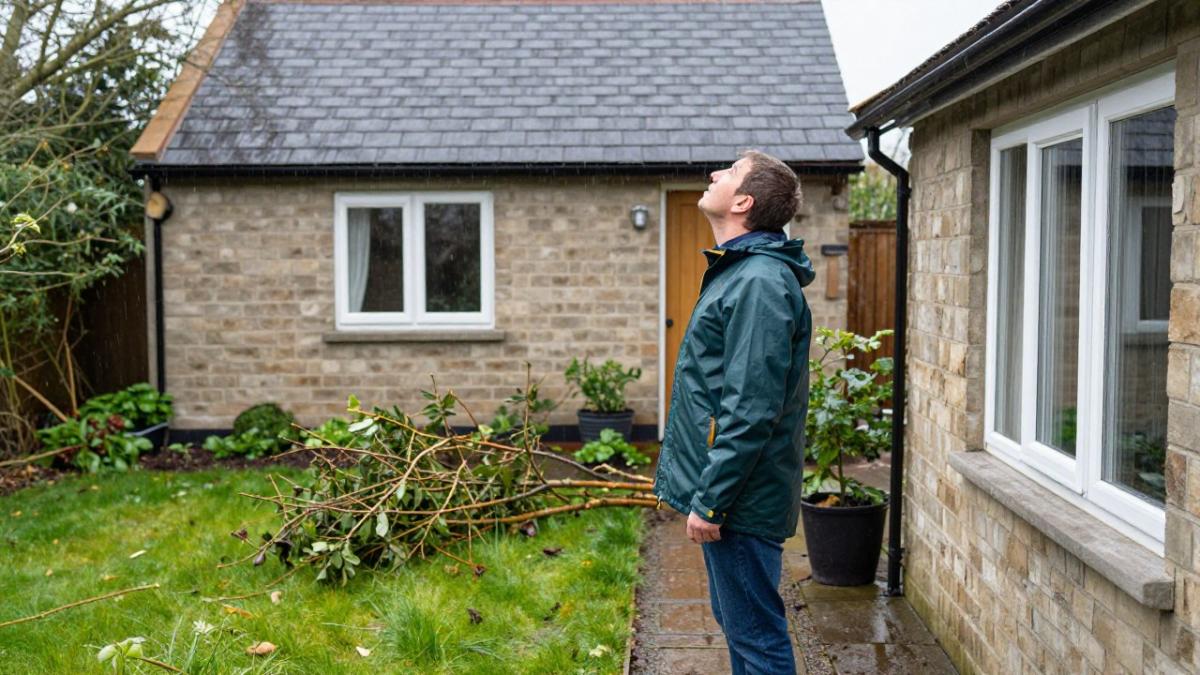
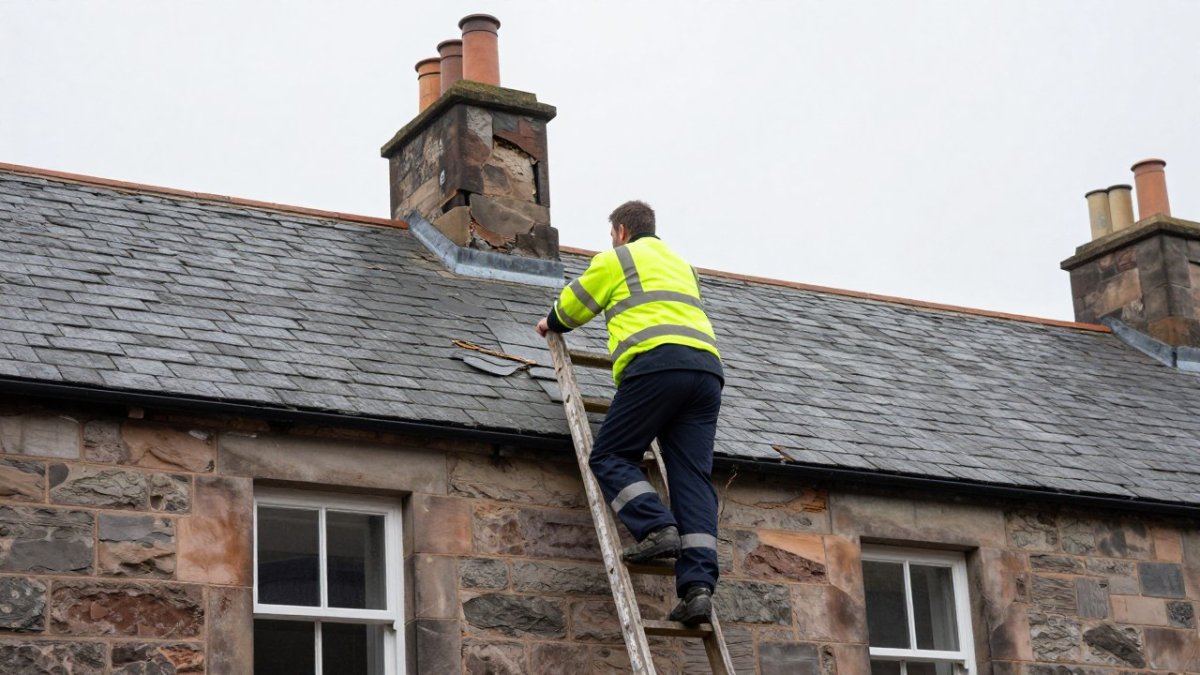
Look for slates or tiles that are missing, cracked, or sitting out of line with their neighbours. Check the ridge and the edges too. Wind can lift the ridge and loosen the leadwork around chimneys and valleys. Keep an eye out for flashing that looks bent or has pulled away from the wall.
Watch for debris on the lawn, such as broken tiles, twigs, or bits of lead. A fallen branch near the roofline can also mean the roof has taken a hit. Use Met Office storm warnings and wind guidance to see how strong the wind was in your area on the day.
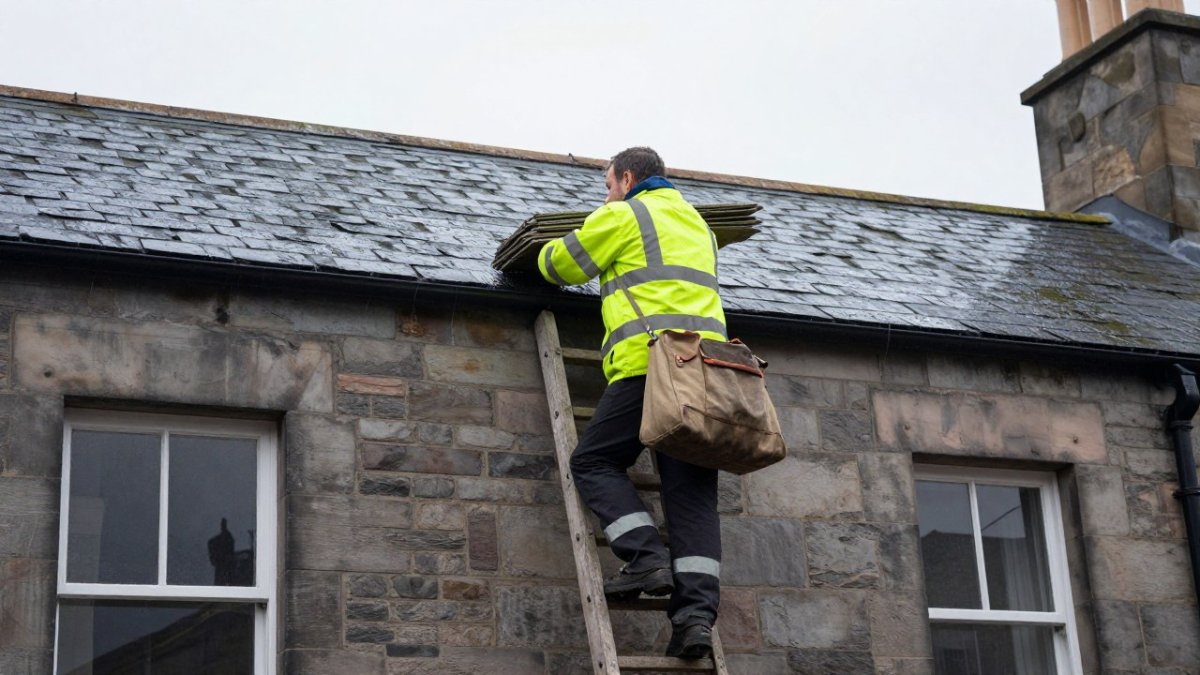
A pair of binoculars helps you see the roof without climbing anything. If you spot a problem, do not climb a ladder in high wind or on wet ground. Call a professional instead.
Inspecting the Loft and Documenting Wind Damage to Roof Structures
Some of the most useful clues sit inside the house. Go into the loft with a torch and check the underside of the roof covering. Look for daylight coming through, wet patches on the timbers, or new dark stains on the insulation. These signs often point to a leak that has not yet reached the ceilings below.
Check the roof timbers for cracks, split rafters, or nails that have lifted. Wind can push on the roof structure and loosen joints, so fresh movement is worth noting.
Take clear photos of anything you find. Include a wide shot and a close-up with something for scale, such as a coin or a ruler. Date each photo. These images help when you talk to your insurer, and Citizens Advice guidance on home insurance claims explains what to expect from the claims process.
Keep a simple written list of what you saw and when you saw it. Dated notes and photos are far more useful than memory when a claim is being assessed.
Roof Damage Inspection Checklist and What to Do After Storm Roof Damage
Use this checklist after any storm:
- Look at the roof from the ground for missing or displaced slates and tiles
- Check ridges, valleys, and chimney leadwork for lifting or gaps
- Scan the gutters and downspouts for loose sections or heavy debris
- Inspect the loft for daylight, damp patches, and fresh stains
- Look for water marks on ceilings and walls inside the house
- Photograph and date everything before any repairs are made
If you find water coming in, place a bucket under the leak and move valuables away from it. Do not try to repair a damaged roof in strong wind or on a wet surface. Limit further damage by covering the area with a tarpaulin only if you can do it safely from inside the property.
Some tasks are best left to a professional. A roofer can confirm whether damage came from the storm or from general wear and tear. For urgent problems, read our guide on emergency roof repair Edinburgh for the safe steps to take now. If you want a full assessment, our residential roof inspection services in Edinburgh explain what the visit covers and how to read the report.
Storm damage is easier to manage when you act early. Keep your photos and notes together in one place. For a deeper look at telling storm damage apart from ordinary wear, see storm damage or wear and tear: how to tell the difference.
The article lists the steps to take after a storm, which can be summarised as follows.
| Check | What to look for | Action |
|---|---|---|
| Roof from the ground | Missing or displaced slates and tiles | Note and photograph |
| Ridges, valleys, chimney leadwork | Lifting or gaps | Note and photograph |
| Gutters and downspouts | Loose sections or heavy debris | Note and photograph |
| Loft | Daylight, damp patches, fresh stains | Note and photograph |
| Ceilings and walls inside | Water marks | Note and photograph |
| Any water coming in | Active leak | Place a bucket and move valuables |
If you are unsure whether your roof has storm damage, contact CJU Roofing Specialists for a clear assessment. Our team covers Edinburgh, East Lothian and Midlothian, and we can help you decide what needs attention first. Get in touch to request a quote and arrange a visit.
Frequently Asked Questions
How can I tell if my roof has storm damage?
Start from the ground with binoculars. Look for slates or tiles that are missing, cracked, slipped or lying in the gutter, and for bent flashing or lifted ridge tiles. Check the gutters and downpipes for granules, grit or fragments of roofing material. Then go into the loft with a torch and look for daylight through the roof, dark water stains on timbers or insulation, and wet patches on the underlay. Photograph anything you find, with dates, before you touch it or make any repairs.
Can a roof leak after a storm without visible damage?
Yes. Wind can lift slates or tiles and let water track underneath them without leaving an obvious gap from below. A leak may also appear days or weeks after a storm, once the affected area has soaked through. If you notice damp patches on ceilings, staining in the loft or a musty smell after bad weather, arrange a professional inspection rather than waiting for the leak to get worse.
When should I call a roofer after a storm?
Call a roofer if you can see any displaced or broken roofing materials, if you find water coming into the property, or if the damage is near the ridge, chimney or a flat roof section. Do not climb onto the roof yourself to inspect it. A qualified roofing contractor can carry out a proper inspection.