 how-to
What Is Included in a Roof Inspection in 2026
Last Updated: November 3, 2026
Quick Summary
A roof inspection is a structured check of your roof covering, flashings, gutters, chimneys and loft space, following a set order from the outside in. Inspectors look for cracked or missing tiles, lifted flashings, blocked drainage and water or damp in the loft. Catching small faults early is usually far cheaper than repairing the water damage they cause.
- Book an inspection after storm damage, visible leaks, overflowing gutters, or for roofs 20 years old or more.
- Flashings are the most common source of leaks, so inspectors check them closely.
- The loft check cross-references external findings and reveals issues like condensation and ventilation failures.
- Inspectors do not walk on fragile or unsafe surfaces, so some areas may need further investigation.
- Reports should grade findings as urgent, near-term or routine, with photographs and named defects.
Table of Contents
- Why a Roof Inspection Matters and When to Book One
- Roof Inspection Checklist: What Gets Checked, Step by Step
- Inspecting the Roof From Inside the Loft
- What Inspectors Can and Cannot Assess Safely
- How Long a Roof Inspection Takes and What Affects It
- Reading Your Roof Inspection Report and Its Findings by Severity
- Booking Your Roof Inspection With CJU Roofing Specialists
- Frequently Asked Questions
This is a CJU Roofing Specialists article. For enquiries, visit cjuroofingspecialists.co.uk.
Why a Roof Inspection Matters and When to Book One
A roof inspection is a structured check of your roof covering, flashings, gutters, chimneys and loft space.
Most homeowners think of a roof inspection only after a leak appears. Learn how early detection prevents costly repairs and how often you need one.
Book an inspection when you notice any of these: Find out what a residential roof inspection covers and how to prepare
- Missing, slipped or cracked tiles or slates after a storm
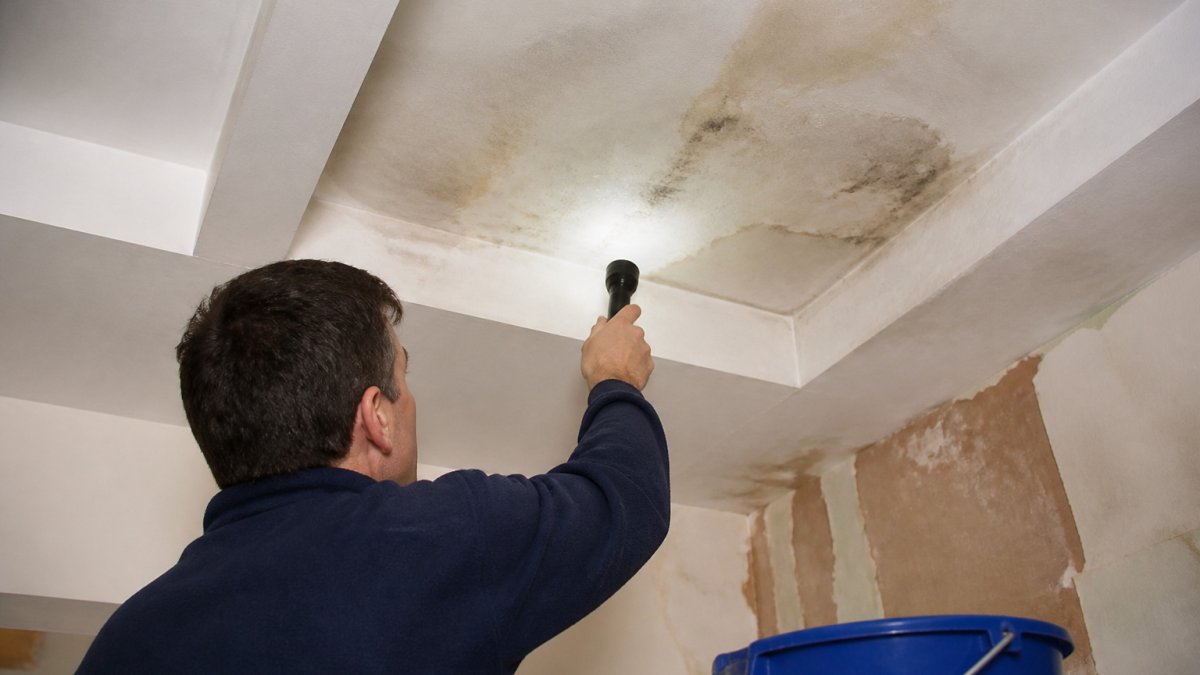
- Water stains on ceilings or walls, or a musty smell in the loft
- Gutters overflowing or sagging
Roof Inspection Checklist: What Gets Checked, Step by Step
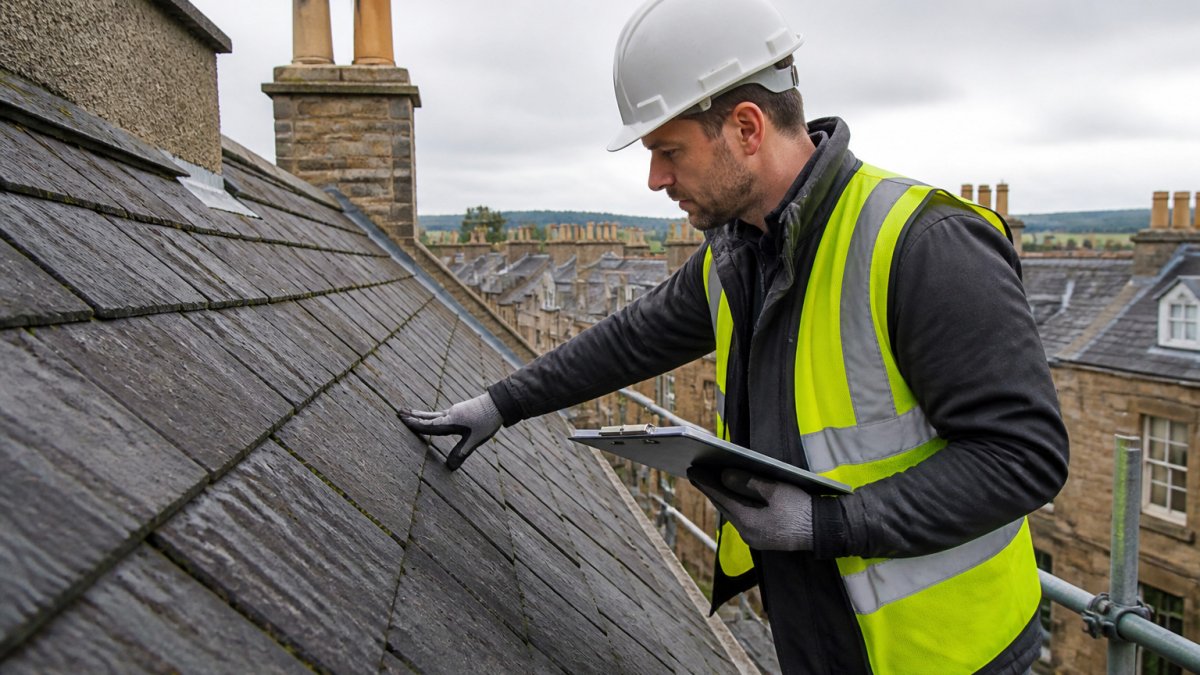
A thorough roof inspection follows a set order, working from the outside in. Here is what a typical visit covers:
- Check the roof covering from ground level and, where safe, from ladder or access equipment.
- Inspect the flashings, seals and junctions where the roof meets walls, chimneys and skylights.
- Review the gutters, downpipes and drainage for blockages, leaks and loose fixings.
- Examine chimneys, vents and other penetrations for cracked pointing and failed seals.
- Look inside the loft for signs of water, damp and structural movement.
- Record findings with notes and photographs, then rank them by urgency.
Each step matters because water usually enters through a small weak point, not through the middle of a tile.
Roof Covering and Tiles, Slates or Membrane
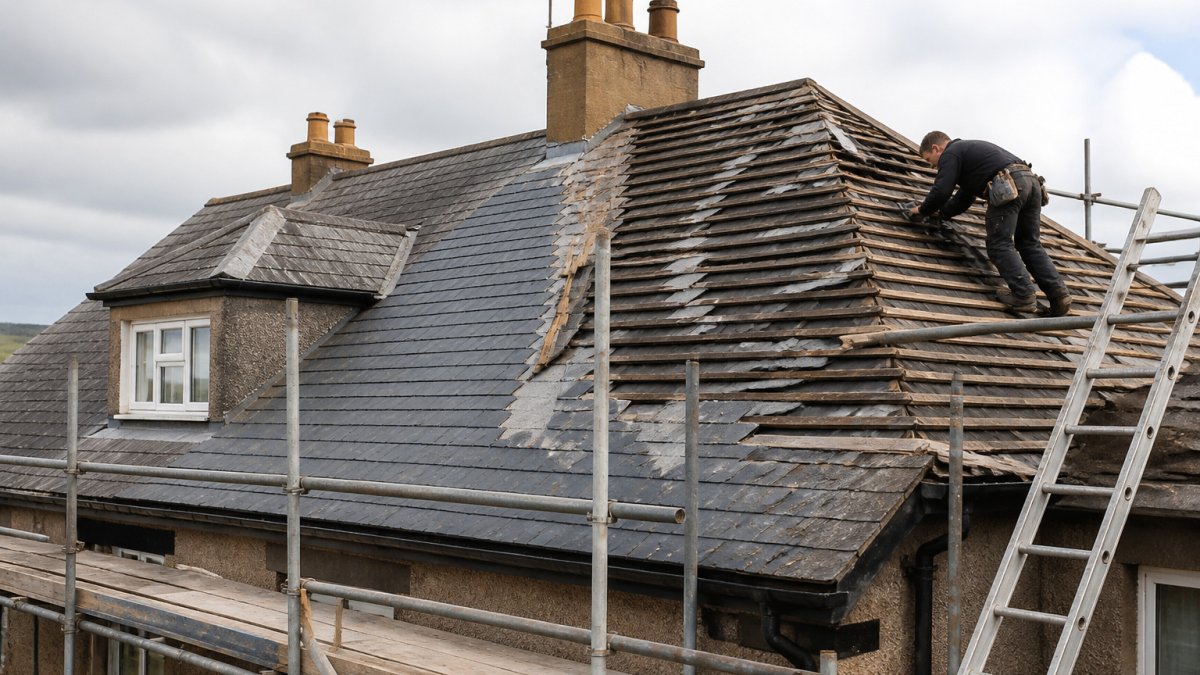
The covering is the first line of defence. Inspectors look for cracked, slipped or missing tiles and slates, and for signs of wear such as surface erosion or lifting. On flat roofs, the check focuses on the membrane for blistering, splits and ponding water. Ponding water that stays after rain is a warning sign because it speeds up deterioration.
Flashings, Seals and Roof Junctions
Flashings are the metal or lead strips that seal the joints where the roof meets chimneys, walls and valleys. They are the most common source of leaks. Inspectors check for lifted edges, cracked sealant and corrosion. Lead work in good condition should look sound with no splits or gaps at the joints.
Gutters, Downpipes, Chimneys and Vents
Blocked or sagging gutters cause water to back up under the roof edge. Downpipes should be secure and free of debris. Chimneys are checked for cracked pointing, leaning stacks and damaged flaunching. Vents and rooflights are inspected for seal failure, since a broken seal lets rain straight into the building.
The article lists the usual order of a roof inspection, with what each stage checks.
| Step | What the inspector checks | Why it matters |
|---|---|---|
| Roof covering | Cracked, slipped or missing tiles and slates; membrane wear on flat roofs | Covering is the first line of defence |
| Flashings and junctions | Lifted edges, cracked sealant, corrosion | The most common source of leaks |
| Gutters and drainage | Blockages, leaks, loose fixings | Blocked gutters back water under the roof edge |
| Chimneys and vents | Cracked pointing, leaning stacks, seal failure | Broken seals let rain straight in |
| Loft space | Water, damp and structural movement | Often where the first clues appear |
| Recording findings | Notes, photographs and urgency ranking | Makes the report usable for action |
Inspecting the Roof From Inside the Loft
The loft is often where the first clues appear, but it is also the part of an inspection most often misunderstood. Learn how to spot water stains, damp insulation and musty odours.
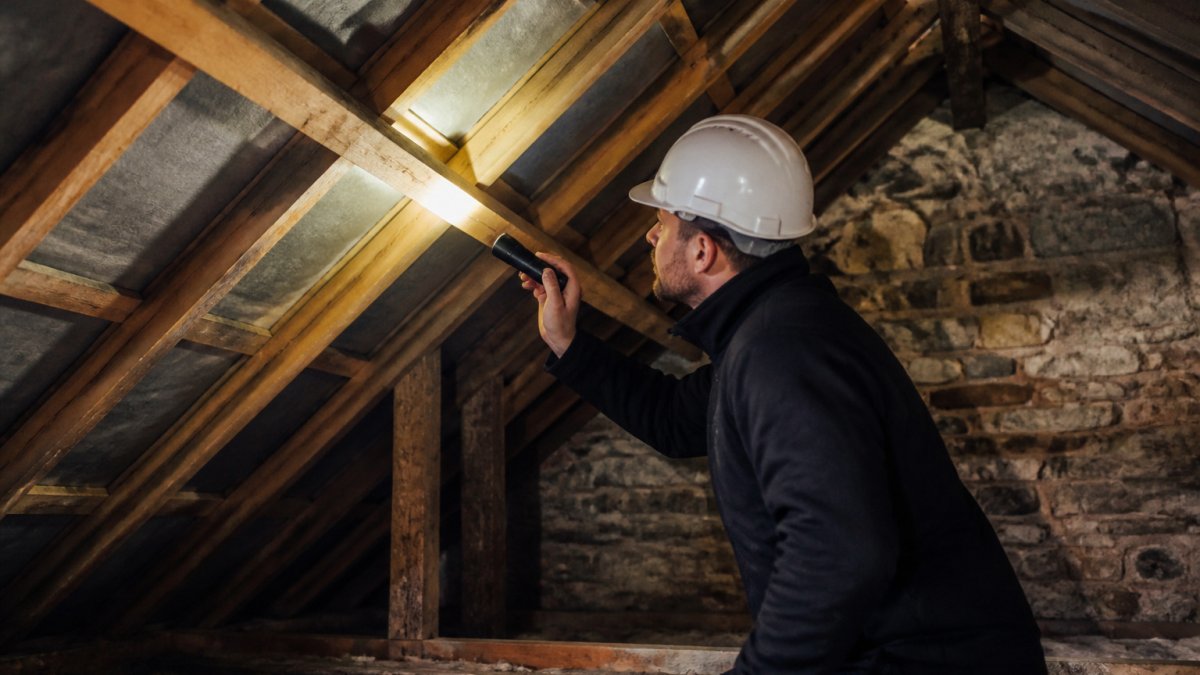
A structured loft walkthrough usually follows this order:
- Underlay and roof underside. Check the underlay for tears, sagging, ponding or staining, and the underside of tiles, slates or membrane for daylight and water tracks.
- Timber structure. Look at rafters, purlins, battens and trusses for staining, rot, insect damage, splitting or deflection. Probe where staining suggests decay, but only where it is safe to do so.
- Insulation and ventilation. Check that insulation is dry, evenly laid and not blocking eaves vents. Compressed or wet insulation loses performance and can trap moisture.
- Penetrations from below. Chimney breasts, soil pipes, vents and rooflights often show staining or gaps on the loft side before they fail visibly outside.
- Party walls and gable ends. Look for damp patches and cracked mortar where the roof meets adjoining structures.
- Photographic record. Good inspectors photograph the loft side of any defect so the report shows both faces of the same problem.
What the loft can tell you that the outside cannot:
- Direction of water travel. A stain on a rafter can show where water is running from, which may be several metres from where it drips.
- Condensation versus leak. Loft-side evidence helps distinguish a genuine roof leak from condensation, which is common in cold weather and often mistaken for a failing roof.
- Structural movement. Deflection in rafters or ridge lines is easier to judge from inside than from ground level.
What the loft cannot tell you:
- Whether a tile above a stain is cracked, slipped or correctly lapped.
- Whether flashings at a chimney or valley are sound.
- Whether a flat roof membrane has blistered or split.
That is why the loft and external checks must be read together.
Watch out: a loft inspection carried out without safe access, adequate lighting or a clear route across the joists can miss defects and create a safety risk.
If the loft check raises questions about insulation, ventilation or condensation, ask the inspector to explain the mechanism in plain language.
What Inspectors Can and Cannot Assess Safely
A roof inspection is a visual assessment, and some parts of the roof cannot be checked safely without specialist equipment. Roof work involves real risk of falls, so an inspector will not walk on fragile or unsafe surfaces (Roof work).
What is usually assessed:
- Visible tiles, slates, membranes and flashings from ground level or safe access
- Gutters, downpipes and drainage
- The loft space and visible structure
What may need further investigation:
- Hidden damp inside walls
- Concealed decay within timber
- Areas of the roof that cannot be reached safely
If an inspector recommends further testing, it is because a visual check cannot confirm the cause of a problem. This is a sensible limit, not a gap in the service.
How Long a Roof Inspection Takes and What Affects It
The length of a roof inspection depends on the property. A small, simple roof may take under an hour, while a large or complex property with several levels, dormers and chimneys can take considerably longer. The main factors are:
- Roof size and number of pitches or sections
- Roof type, such as pitched, flat or mixed
- Access, including whether scaffolding or ladder access is needed
Allow time after the visit for the written report, which is where you will see the full list of findings.
Reading Your Roof Inspection Report and Its Findings by Severity
A roof inspection is only as useful as the report that follows it. Most reports group findings by severity, but the labels vary between inspectors, so the practical skill is knowing what each band means for your next step. A workable three-tier structure looks like this:
- Urgent (act now). Active water ingress, slipped or missing covering over a habitable space, failed flashings at a chimney or valley, or a structural defect such as a deflected rafter or cracked ridge. These are the findings that can cause damage or risk within days or weeks, and they should be addressed before the next significant rainfall where possible.
- Near-term (plan within weeks or months). Early wear that is not yet causing damage, surface erosion on tiles, minor sealant failure, a slightly sagging gutter run, or localised moss that is trapping moisture. These are best bundled into a single planned repair rather than left to escalate.
- Routine (maintenance). Clearing gutters and downpipes, removing debris, re-pointing a small area of mortar, or trimming vegetation that is touching the roof. These can be scheduled around weather and budget.
How to judge whether a report is well graded:
- Each finding should name the component and the defect. "Flashing at rear chimney lifted on the south elevation" is actionable; "roof requires attention" is not.
- Each finding should carry a photograph. Ask for the image reference if one is missing, and check that the photo shows the defect clearly rather than a distant roofscape.
- Each finding should state the likely consequence if left. A slipped slate over a loft is a different risk from a slipped slate over a valley gutter.
Questions worth asking if the grading is unclear:
- Which findings are urgent, and which can wait for the next planned maintenance visit?
- Is any finding based on a limited view, such as a roof section that could not be accessed safely?
- Does the report recommend further investigation, and if so, what would that involve?
A common pattern is for homeowners to focus on the most expensive-sounding item and overlook a cheap routine fix that is causing the real damage.
Watch out: a report that lists defects without severity, photographs or a recommended action is difficult to act on and difficult to compare with other quotes.
When you have findings to act on, a comparison of repair options can help you decide. Our guide to How to Assess Roof Repair Quotes in 2026 explains what to look for in a quote.
Booking Your Roof Inspection With CJU Roofing Specialists
If you are in Edinburgh, East Lothian or Midlothian and want a clear picture of your roof's condition, CJU Roofing Specialists can arrange an inspection. Our services include roof slating and tiling, flat roofing, leadwork, chimney repairs, guttering and full roof replacements.
Pricing depends on the condition of your roof. Request a quote for an accurate figure for your property. To book an inspection or ask a question, contact the CJU Roofing Specialists team today.
Frequently Asked Questions
What does a roof inspection include?
A roof inspection checks the roof covering, flashings, seals at junctions, gutters, downpipes, chimneys, vents and rooflights, along with the roof structure and signs of water ingress. The inspector looks at the outside from ground level and, where safe, from the roof itself, then checks the loft for staining, damp and ventilation issues. Findings are usually recorded in a written report with photographs, grouped by urgency so you know what needs attention now and what can wait for planned maintenance.
Can a roof inspection be done from inside the property?
Yes, part of a roof inspection can be carried out from inside, mainly in the loft. An inspector can look for daylight through the roof, damp or staining on timbers, rusted fixings, and signs of condensation or poor ventilation. However, a loft check cannot reveal every defect, such as a cracked tile or a failing flashing that has not yet leaked, so an external inspection is still needed for a complete picture.
How long does a roof inspection take?
Most domestic roof inspections take between one and two hours, though this depends on the size and complexity of the roof, the roof type, and whether a loft check is included. Larger properties, multiple roof planes, or roofs with several chimneys and rooflights will take longer. Allow additional time if you want the inspector to talk you through the findings on site.
What should a roof inspection report include?
A useful roof inspection report should describe each area inspected, note any defects with photographs, and rate the severity of each finding so you can prioritise repairs. It should also state any areas that could not be accessed or assessed safely, and give clear recommendations for next steps. Ask for the report in writing, as it can be useful for maintenance records, insurance discussions or when comparing repair options.