 how-to
How to Assess Roof Repair Quotes in 2026
Quick Summary
To assess roof repair quotes, check that each one is in writing, dated, and breaks the job into named line items covering materials, labour, access, waste removal, VAT and a workmanship guarantee. Then normalise the totals so you compare the same scope, not just the bottom-line figure.
- A written quote is a good first sign of a trustworthy roofer; vague quotes often lead to a higher final bill.
- Build a scope matrix with the same rows for every quote, using each roofer's own line items.
- Add the cost of any excluded item, such as scaffolding or waste removal, before comparing totals.
- Check each quote's repair method, materials and assumptions, since a lower total may hide exclusions.
- Ask each roofer to confirm your adjusted total in writing before deciding.
Table of Contents
- What a Roofing Quote Should Include
- Roof Repair Quote Checklist
- Comparing Multiple Roof Repair Quotes Side by Side
- Questions to Ask a Roofer Before You Accept
- Checking Insurance Cover for Roof Leak Repairs
- Booking Your Roof Inspection and Requesting a Written Quote
- Frequently Asked Questions
What a Roofing Quote Should Include
Last Updated: October 31, 2026
A roof repair quote should show exactly what work will be done, what materials go in, and what the job will cost in total. A written quote is a good first sign of a trustworthy roofer.
Most homeowners in Edinburgh, East Lothian and Midlothian compare several quotes before choosing a roofer. The problem is that quotes rarely look alike. One might list ten items, another just one total figure.
Line items to look for
A good roof repair quote breaks the job into clear line items. Each one should describe a specific task, not a general promise.
Look for these items:
- Site survey or inspection: Does the price include a visit to check the roof first?
- Scope of repair: Which slates, tiles, flashings or leadwork will be replaced or repaired?
- Materials: Named products, quantities and sizes, such as underlay or ridge tiles.
- Labour: How many people, and for how many days?
- Access: Scaffolding, ladders or hoists needed to reach the roof.
- Waste removal: Who clears away old materials and rubble?
- Guarantee: What workmanship guarantee applies, and for how long?
- VAT: Whether the figures include or exclude VAT.
If any of these are missing, ask the roofer to add them. A quote that names every item is far easier to check.
Materials, labour and access costs
Three costs make up most of a roof repair bill: materials, labour and access. Each should appear as its own line so you can see where the money goes.
- Materials depend on the roof covering. Repairs may need matching stock.
- Labour depends on how complex the repair is, not only how big the area is. Stripping and relaying a damaged section takes longer than patching a single slate.
- Access is often overlooked. A steep or high roof may need scaffolding, which can add a large share of the total.
Pricing varies, so request a quote for your specific roof rather than relying on general figures. You can compare roof repair costs by repair type to see how a typical bill breaks down before you call.
Roof Repair Quote Checklist
Use this checklist to test any roof repair quote before you accept it.
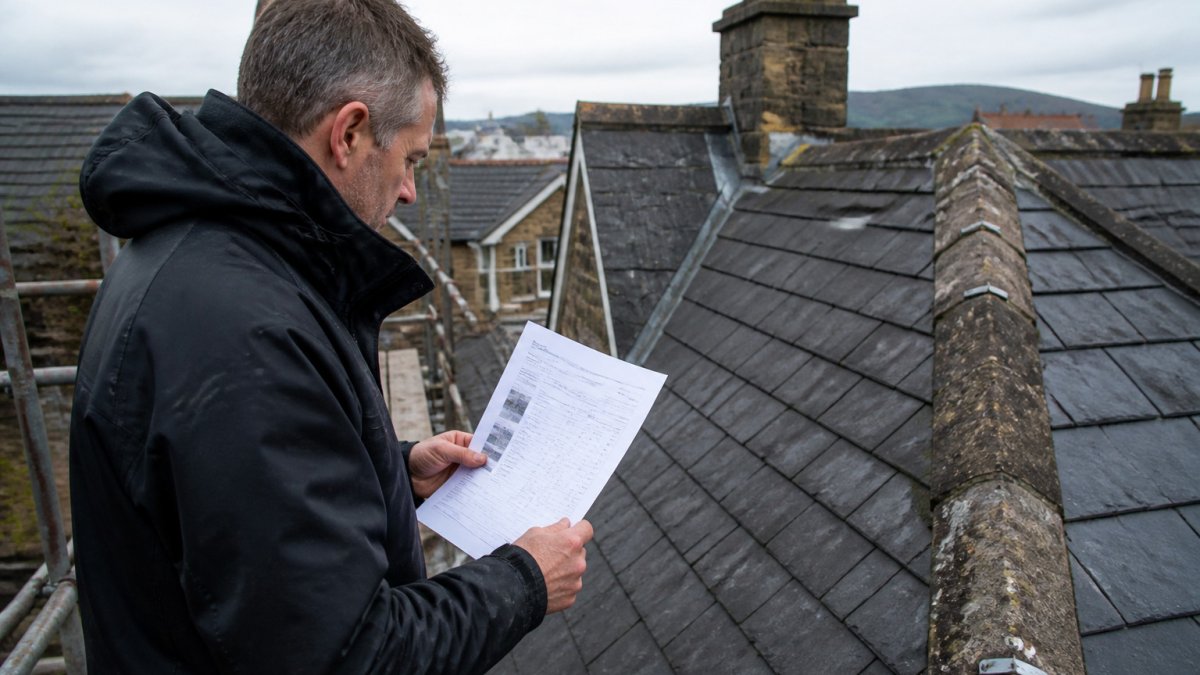
- The quote is in writing and dated.
- The roofer has inspected your roof, or explains why a visit was not needed.
- Each repair task is listed separately.
- Materials are named with quantities.
- Labour is shown, with an estimated number of days.
- Access costs such as scaffolding are included or clearly excluded.
- Waste removal is covered.
- Payment terms, including any deposit, are stated.
- A workmanship guarantee is given in writing.
A quote that ticks most of these boxes gives you a solid basis for comparison.
Comparing Multiple Roof Repair Quotes Side by Side
The best way to compare roof repair quotes is to normalise them before you look at the totals. Two quotes can look similar on paper yet cover completely different work. A lower total often hides missing access, waste removal or an allowance for hidden damage.
At CJU Roofing Specialists, we recommend a five-step method that turns a pile of quotes into a like-for-like comparison.
Step 1: Build a scope matrix
Create a simple table with the same rows for every quote. Use the line items from each roofer's written quote, not your own assumptions. A workable matrix looks like this:
| Scope item | Quote A | Quote B | Quote C |
|---|---|---|---|
| Inspection included | Yes | No | Yes |
| Area to be repaired (m² or number of slates/tiles) | Stated | Stated | Not stated |
| Materials named with quantities | Yes | Partly | Yes |
| Access (scaffolding, ladders, hoists) | Included | Not stated | Included |
| Waste removal | Yes | Yes | No |
| Workmanship guarantee | Stated | No | Stated |
| VAT treatment | Inclusive | Exclusive | Inclusive |
If a row is blank, ask the roofer to fill it in before you decide. Do not guess on their behalf.
Step 2: Normalise the totals
Once the rows match, adjust each total so you are comparing the same thing. Add the cost of any excluded item (such as scaffolding or waste removal) to the quote that leaves it out. If one quote excludes VAT and another includes it, convert both to the same basis. Only then compare the bottom line.
Ask each roofer to confirm your adjusted total in writing.
Step 3: Compare repair specifications, not just prices
Two quotes for the same leak can propose different repair methods. One may patch a single slate; another may strip and relay a section of roof. Check that each quote states:
- The repair method (patch, strip and relay, overlay, replacement)
- The materials and matching stock (slate, clay tile, lead, underlay)
- The workmanship standard the roofer will work to
- Whether the repair is intended as a permanent fix or a temporary measure
A quote that names the method and materials is easier to assess than one that simply says "repair roof".
Step 4: Check assumptions and exclusions
Every quote rests on assumptions. Look for statements such as "assuming no rotten timber" or "price excludes replacement of failed underlay". These are not necessarily red flags, but they tell you where the price could rise. List each assumption next to the quote and ask the roofer what happens if it proves wrong.
Step 5: Score and shortlist
With scope, totals, specifications and assumptions aligned, rank the quotes. Price matters, but so does the clarity of the written quote, the workmanship guarantee, and how directly the roofer answered your questions.
Once the rows match and the totals are normalised, you can compare with confidence. A quote that looks cheaper may be missing access or waste removal, which you will pay for later.
Questions to Ask a Roofer Before You Accept
Before you sign anything, ask these questions:
- Will someone inspect the roof before quoting, and what does that involve?
- What is included in the price, and what is excluded?
- How will hidden damage be found and priced?
- What workmanship guarantee do you offer, and for how long?
- What is your payment schedule, and how large is any deposit?
- When can you start, and how long will the work take?
- Can you provide references from recent roof repairs nearby?
A reliable roofer answers each question directly and in writing.
Checking Insurance Cover for Roof Leak Repairs
Many homeowners ask whether home insurance covers roof leak repairs. The answer depends on the cause of the damage and the terms of your policy.
Before you accept a quote for a leak repair, read your policy wording or speak to your insurer. Our guide to roof insurance claim evidence explains exactly what to collect and why.
Insurers usually ask whether the damage was sudden or gradual. A roofer's written description of the cause can help your claim.
Booking Your Roof Inspection and Requesting a Written Quote
The fastest way to get a reliable quote is to book a roof inspection first. You can see what a professional roof inspection involves so you can confirm each step is covered.
To request a written quote from CJU Roofing Specialists, contact us with a brief description of the problem and the type of roof you have.
Get in touch to book your inspection and receive a clear, written quote. Use our contact page to reach the team directly.
Frequently Asked Questions
What should a roof repair quote include?
A clear roof repair quote should name the company and its contact details, describe the exact repair scope, and list materials and labour separately. It should also state access arrangements, the project timeline, payment terms and any deposit required. Check whether the quote mentions the warranty or workmanship guarantee and whether it excludes anything, such as scaffolding or hidden timber damage. A quote that only gives one total figure with no breakdown is harder to compare and harder to check. Ask for a written, itemised version before you make a decision.
Should I get more than one quote for roof repairs?
Getting at least two or three written quotes is the most practical way to judge whether a price is fair. Each quote should describe the same work so you can compare like with like. If one quote is far lower or higher than the others, ask each contractor to explain why. Differences often come from the inspection method, the materials specified or the assumptions made about access. Comparing quotes also helps you spot which contractors have understood the problem properly.
Can I claim for roof leak repairs on home insurance?
Whether a roof leak is covered depends on your policy wording and the cause of the damage. Most policies cover sudden damage from storms, but they often exclude gradual wear, lack of maintenance or damage that was already visible before you bought the property. Read your policy documents or speak to your insurer before you instruct work. Keep photographs, dated records and the written quote, as your insurer may ask for evidence. A detailed, itemised quote from a professional roofer can support your claim.
What questions should I ask a roofer before accepting a quote?
Ask whether the roofer will carry out a site inspection before quoting and what that inspection covers. Find out who will do the work, whether they are directly employed or subcontracted, and whether they hold appropriate insurance. Ask how long the guarantee lasts and what it covers, and request examples of similar completed jobs. Confirm the start date, the expected duration and the payment schedule. Clear answers to these questions usually indicate a contractor who will manage the job professionally.