 how-to
When to Replace Old Roof: Signs, Lifespan and Decisions
Last Updated: November 1, 2026
Quick Summary
You should replace old roof coverings when wear is widespread, leaks keep appearing in different places, or the roof has reached the end of its typical lifespan for its material. Isolated damage can often be repaired, but widespread wear and recurring leaks usually mean it is time to replace old roof sections or the whole covering.
- Widespread wear across many areas points towards replacement rather than repair.
- Recurring leaks in different spots often mean the covering has reached the end of its life.
- Natural slate commonly lasts 75 to 100 years or more when properly maintained.
- Concrete tiles typically last 40 to 60 years, and their fixings often fail before the tiles.
- Single ply and flat roofing systems commonly last 20 to 30 years, varying by system and installation.
Table of Contents
- Signs You Need a New Roof
- How Long a Roof Lasts by Material
- Roof Replacement or Repair: How to Decide
- Roof Inspection Checklist You Can Use Safely
- Arranging Your Roof Assessment With CJU Roofing Specialists
- Frequently Asked Questions
This is a CJU Roofing Specialists article. For enquiries, visit cjuroofingspecialists.co.uk.
Signs You Need a New Roof
Knowing when it is time to replace old roof coverings can save you from costly damage down the line. Homeowners across Edinburgh, East Lothian and Midlothian face this decision every year.
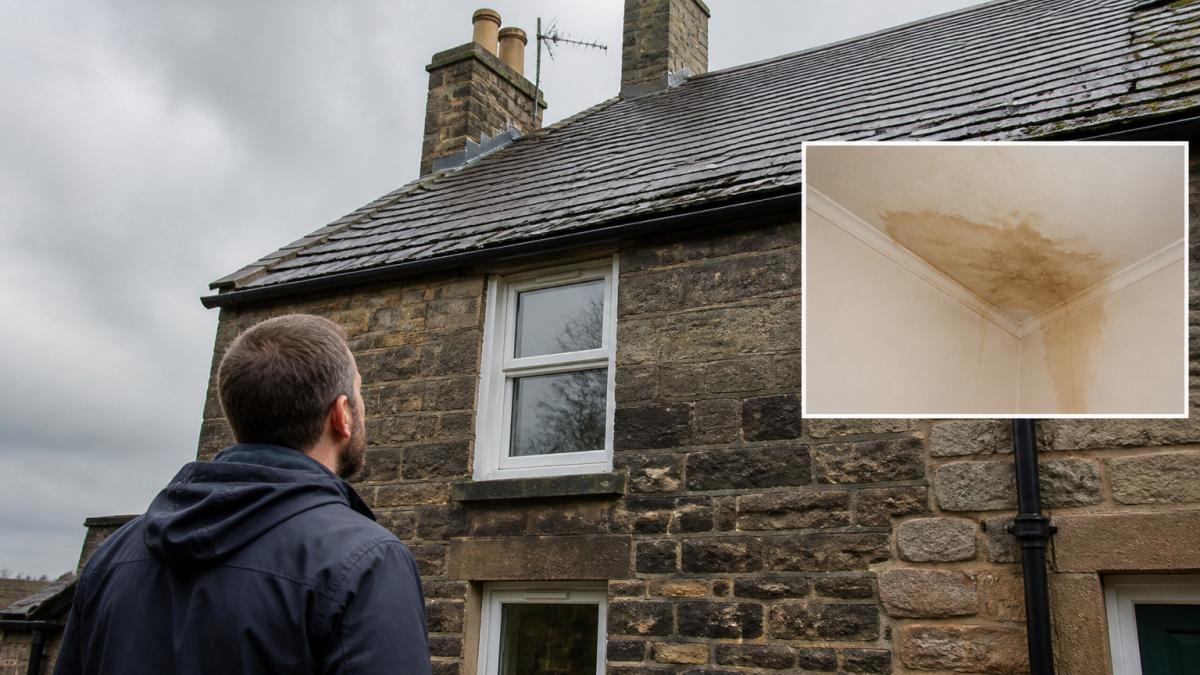
A roof does not usually fail overnight. It wears down slowly, and the signs build up over time. You can read about how to spot hidden roof leaks early before they turn into costly damage.
Visible wear on the roof surface
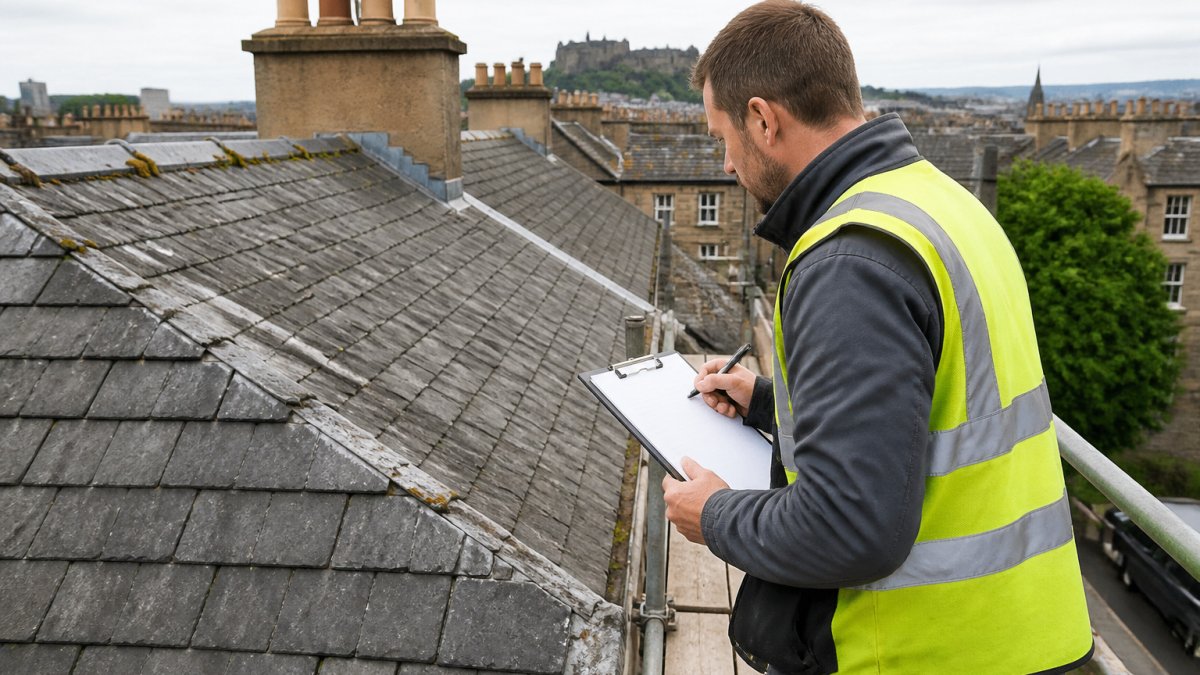
Start with a look from the ground using binoculars, and only climb up if it is safe to do so. Watch for these signs:
- Missing, loose or cracked slates or tiles that leave gaps to the felt underneath
- Curling or lifting edges on the surface
- Moss or algae growth that holds moisture against the covering
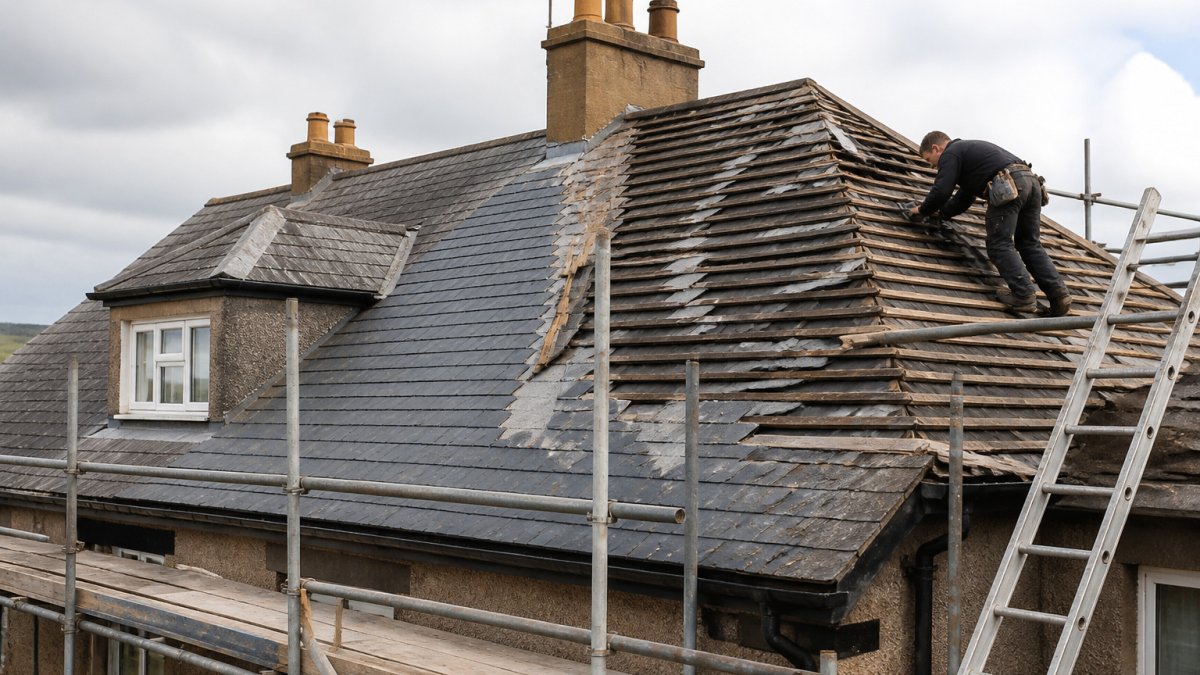
A few isolated problems can often be repaired. Widespread wear across many areas points towards replacement.
Signs of water getting into the home
Water inside the house is a strong sign the roof is no longer keeping the weather out. Check these areas:
- Stains on ceilings or top-floor walls, especially after rain
- Damp patches or peeling paint near the roofline
- A musty smell in the loft or top bedrooms
Recurring leaks in different spots often mean the whole covering has reached the end of its life.
How Long a Roof Lasts by Material
Roof lifespan depends heavily on the material used. Many homeowners have a mix of slate, tile and flat roofing, so knowing the typical range helps you plan ahead. The ranges below are realistic working figures that most roofing practitioners would recognise, not guarantees, your roof's actual age, condition and past repairs matter more than the average.
- Natural slate: Commonly 75 to 100 years or more when properly maintained, making it one of the longest-lived options.
- Concrete tiles: Typically 40 to 60 years. Interlocking concrete tiles are durable but can become brittle with age, and the fixings and battens underneath often fail before the tiles themselves.
- Clay tiles: Typically 50 to 70 years. Clay is very long-lived but vulnerable to frost damage and to impact from falling debris, and individual tiles can crack over time.
These are general ranges, not guarantees. If you are unsure of your roof's age, a professional inspection can help you estimate it.
Factors that shorten or extend roof life
Several factors affect how long your roof lasts, and understanding them helps you judge whether your roof is beating or lagging the averages above:
- Exposure: Coastal and high-wind sites weather roofs faster. Salt spray, driving rain and wind uplift all accelerate wear, so a roof on an exposed site may sit at the lower end of its material range.
- Ventilation: Poor airflow traps moisture in the loft and speeds up decay of timbers, battens and fixings. A well-ventilated cold roof typically lasts longer than a poorly ventilated one of the same material.
- Maintenance: Clearing gutters and valleys, removing moss and fixing small faults early adds years. A roof that has been maintained will usually outlast an identical roof that has not.
Regular care is one of the most reliable ways to get the full expected life from your roof. If your roof is already past the middle of its material range and showing widespread wear, it is worth planning for replacement rather than waiting for a failure.
The article gives these typical lifespan ranges for each roofing material.
| Material | Typical lifespan | Key note |
|---|---|---|
| Natural slate | 75 to 100 years or more | Among the longest-lived options when maintained |
| Concrete tiles | 40 to 60 years | Fixings and battens often fail first |
| Clay tiles | 50 to 70 years | Vulnerable to frost and impact damage |
| Single ply and flat roofing | 20 to 30 years | Varies by system and installation quality |
| Lead and metal details | 60 to 100 years or more | Joints and fixings need regular checks |
Roof Replacement or Repair: How to Decide
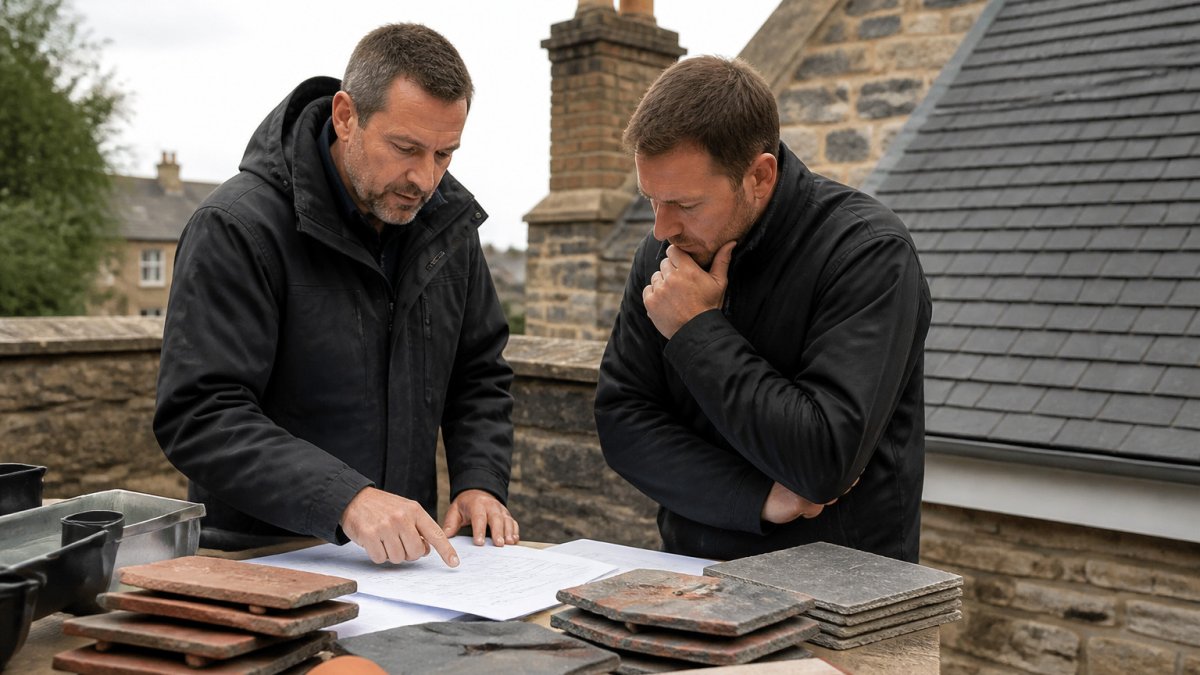
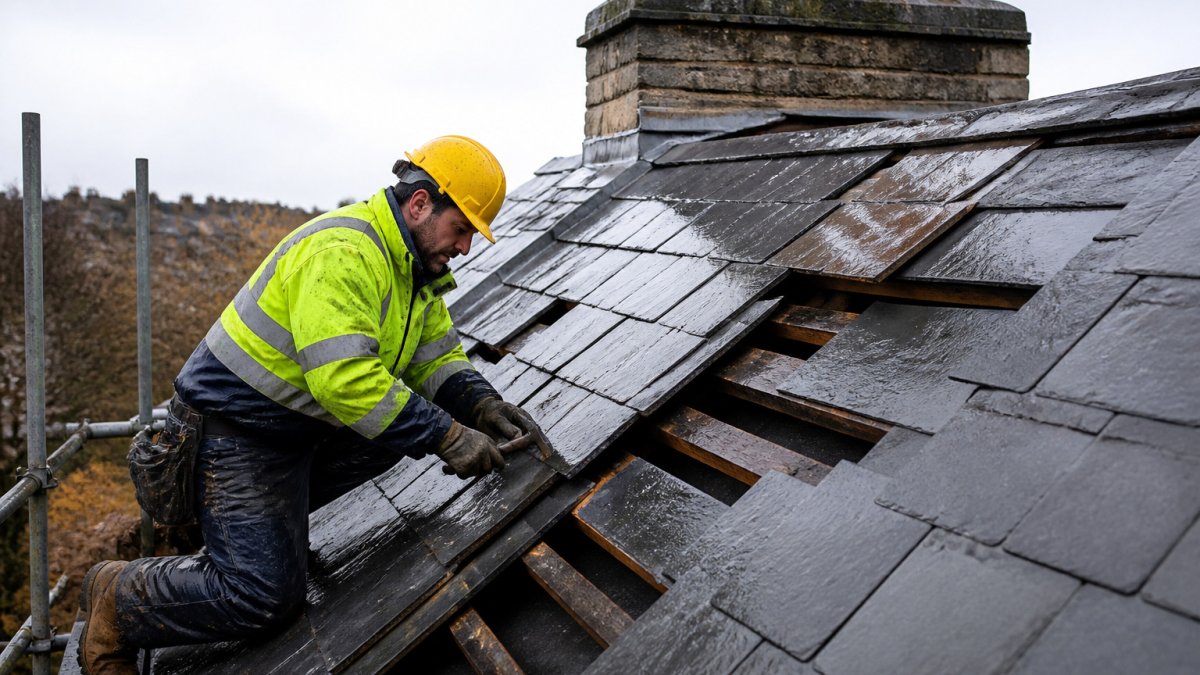
The choice between repair and replacement comes down to how much of the roof is affected, how old it is, and whether the underlying structure is sound, since a damaged roof is not always worth patching when it is time to replace old roof sections. A simple rule helps: if the damage is isolated and the rest of the roof is sound, repair usually makes sense.
A condition-based way to decide
Work through these questions in order. The first 'yes' usually points to replacement:
- Is the roof past its expected lifespan for its material? If it is already at or beyond the range in the section above, repair is usually a stopgap.
- Is the damage widespread rather than isolated? Widespread wear across many areas points towards replacement; a single damaged area points towards repair.
- Are leaks recurring in different places? Recurring leaks in different spots often mean the whole covering has reached the end of its life.
- Are there structural concerns? Sagging timbers, daylight through the roof or dark patches on timbers usually call for full replacement and a professional assessment.
- Have you already paid for repeated repairs? If you find yourself paying for the same problem again and again, the money may be better spent on a new roof.
Repair versus replacement at a glance
- Repair suits a single damaged area, a recent storm fault, a slipped slate or a roof that is otherwise in good order and well within its expected life.
- Replacement suits widespread wear, repeated leaks in different places, a roof reaching the end of its expected life, or a covering that is sound but whose fixings and battens have failed.
- Structural concerns, such as sagging timbers, usually call for full replacement and a professional assessment before any work is planned.
How repair costs accumulate
A single repair is rarely expensive on its own, but the pattern matters more than any one bill. Each visit carries a call-out and access cost, and each repair on an ageing roof tends to be followed by another within a few years. Over time, the total spent on repairs can approach the cost of a replacement, without giving you a new roof at the end of it.
Comparing quotes fairly
Cost depends on the size, pitch, material and access of your roof, so pricing varies. Request a quote from CJU Roofing Specialists for current pricing. When comparing quotes, ask each provider:
- What the quote includes, stripping, disposal, underlay, battens, flashing and making good
- What workmanship guarantee is offered, and for how long
- Whether they hold insurance cover and relevant accreditation
A written quote that itemises these points is far easier to compare than a single figure. For a guide to comparing roof replacement providers and checking guarantees and insurance, see our Lothians checklist. Ask any provider about workmanship guarantees, insurance cover and what the quote includes before you commit.
Roof Inspection Checklist You Can Use Safely
A simple checklist helps you spot problems early. To see what a professional inspection covers and how often to book one, read why a professional roof inspection is worth it.
From the ground:
- Look for missing, cracked or slipped slates or tiles
- Check the ridge and hip lines for gaps or loose sections
- Note any sagging along the roof line
From inside the home:
- Check ceilings and top-floor walls for stains or damp patches
- Look in the loft for wet insulation, daylight through the roof or dark patches on timbers
- Smell for a musty odour in the loft or top rooms
Take photos and dates as you go. These records are useful for a professional assessment and for any insurance claim.
Safety note: Working at height is dangerous. If anything needs a closer look, arrange a professional inspection rather than climbing up yourself (Roof work).
Arranging Your Roof Assessment With CJU Roofing Specialists
If your checklist raised concerns, a professional assessment gives you a clear picture of what is needed.
A proper assessment helps you decide between repair and replacement based on the actual condition of your roof.
To arrange your assessment, get in touch with our team for a quote. We will explain the options clearly so you can make the decision that suits your home and budget.
Frequently Asked Questions
How do I know it's time to replace my roof?
Look for a combination of signs rather than a single fault. Missing, cracked or curling slates or tiles, granules washing into gutters, recurring leaks in the same spots, daylight visible in the loft, and a roof that sags are all strong indicators. If the roof is near the end of its expected life and repairs are becoming frequent, replacement is usually the more sensible long-term choice. A professional inspection can confirm whether the issues are isolated or widespread across the roof.
What is the average lifespan of a roof in the UK?
Lifespan depends heavily on the material and the quality of installation. Natural slate can last a very long time when well maintained, while concrete and clay tiles and bitumen felt or single-ply flat roofs generally have shorter service lives. Weather exposure, ventilation, maintenance and the pitch of the roof all influence how long it lasts. Because every roof is different, an inspection is the most reliable way to estimate how much life remains.
Can an old roof be repaired instead of replaced?
Often it can, provided the damage is isolated and the structure underneath is sound. Replacing a few slates, re-leading a valley or resealing flashings can extend a roof's life considerably. Repair becomes less sensible when defects are spread across the whole roof, the timbers show deterioration, or repairs keep recurring. Request a quote from CJU Roofing Specialists to compare the options for your property.
How often should a roof be inspected?
Many homeowners arrange a professional inspection every few years, and always after a significant storm or when they notice a new leak or stain. Checking gutters, flashings and the ceiling below after heavy weather also helps you catch problems early. Regular inspections are useful because they can reveal small defects before they turn into structural or water damage inside the home.