 Ultimate guide
7 Benefits of Annual Roof Maintenance for UK Homes
Last Updated: November 12, 2026
Quick Summary
Annual roof maintenance is a yearly inspection and upkeep routine that catches small faults early, when they are simple and inexpensive to fix. It protects the structure beneath the roof covering, keeps gutters and drainage clear, and makes spending easier to plan than emergency repairs.
- Small faults spotted early are far simpler and less disruptive to fix than damage left for a season or two.
- Check for slipped or missing slates and tiles, especially after a windy spell, since one gap can let water into the loft.
- Look in the loft for damp patches, wet insulation and daylight through gaps after rain.
- Request a written report after each inspection and keep it as a maintenance record.
Table of Contents
- Why Annual Roof Maintenance Pays for Itself
- Spotting Signs of Roof Damage Before It Spreads
- How to Find a Roof Leak from Inside Your Home
- Planned Maintenance vs. Reactive Repairs
- Roof Inspection Checklist: What a Professional Checks
- Seasonal Maintenance Checks and Material-Specific Care
- Booking Your Next Roof Inspection with CJU Roofing Specialists
- Frequently Asked Questions
This article is published by CJU Roofing Specialists. For enquiries, visit cjuroofingspecialists.co.uk.
Why Annual Roof Maintenance Pays for Itself
Annual roof maintenance is one of the cheapest ways to protect the most expensive part of your home. Across Edinburgh, East Lothian and Midlothian, a small, inexpensive fault that is spotted early can become a large, disruptive repair once it has been left for a season or two. A yearly inspection catches those faults while they are still simple to fix.
The main benefits of annual roof maintenance include finding small problems early, protecting the structure beneath the roof covering, keeping gutters and drainage clear, helping you plan spending, and giving you a clear picture of your roof's condition.
Routine upkeep is generally less disruptive than emergency work. Left alone, the same fault can allow water into the loft, stain ceilings and damage insulation, turning a simple job into a much bigger one.
Spotting Signs of Roof Damage Before It Spreads
Many roof problems give warning signs well before water reaches your rooms. The key is knowing what to look for and how different roof coverings fail. Homeowners who understand these early indicators are better placed to catch a small fault before it becomes a major repair.
What to look for from the ground:
- Slipped, cracked or missing slates or tiles, particularly after a windy spell. On pitched roofs, a single missing slate can allow water to track along the underlay and into the loft.
- Moss or algae build-up, which can hold moisture against the covering and, on some surfaces, lift edges as it grows.
- Dark streaks running down the roof face, often a sign of worn granules on older tiles or of water tracking behind a flashing.
- Sagging ridges or dipping rooflines, which may indicate movement in the structure or failed fixings.
- Gutters that pull away from the fascia, often caused by blocked downpipes or the weight of debris.
What to check inside the loft:
- Damp or dark patches on the underside of the roof boards or on rafters.
- Wet or compressed insulation.
- Daylight showing through gaps in the roof covering.
- A musty smell, which can point to trapped moisture and poor ventilation.
Material-specific warning signs:
- Natural slate: slipped slates are common as fixings corrode; check the battens and nails during any inspection.
- Concrete tiles: cracked or delaminated tiles and worn mortar at ridges and hips.
- Flat roofs and single-ply membranes: ponding water, blisters, splits and lifted seams are the main failure points; drainage outlets must be kept clear.
- Lead flashings: lifted, cracked or torn lead around chimneys, dormers and walls.
Watch out: storm damage deserves prompt attention. A single gale can shift tiles that look fine from below, and a quick visual check after severe weather is always worthwhile. If you notice any of these signs, arrange an inspection rather than waiting to see whether the problem gets worse.
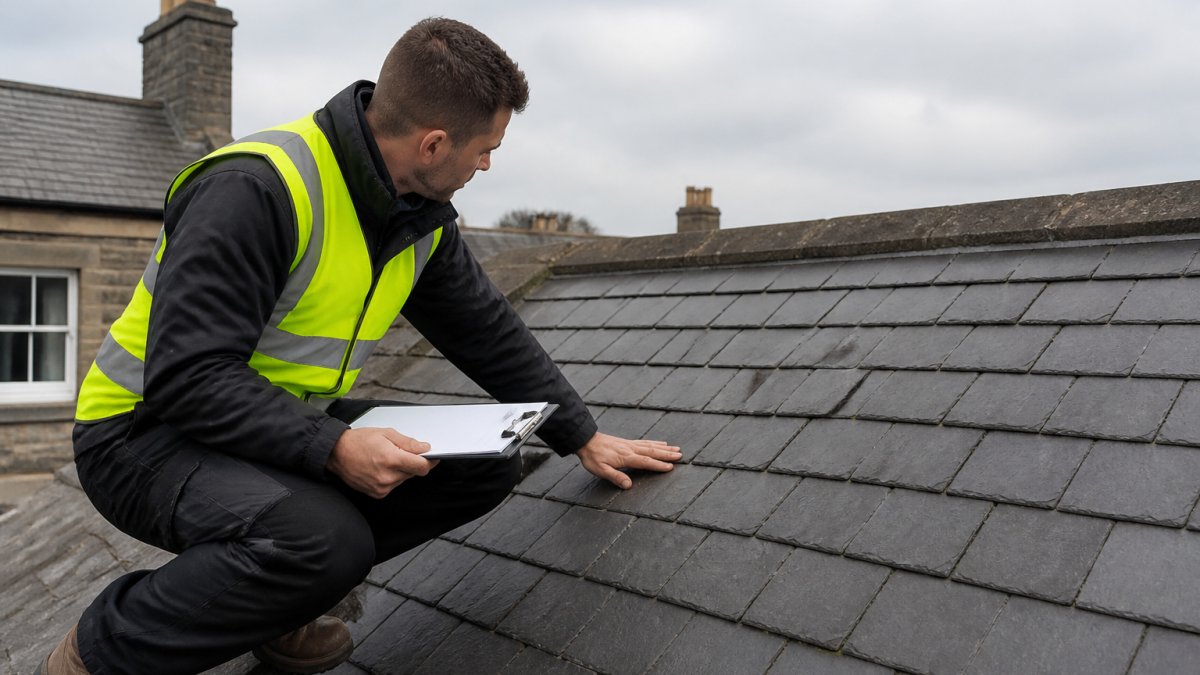
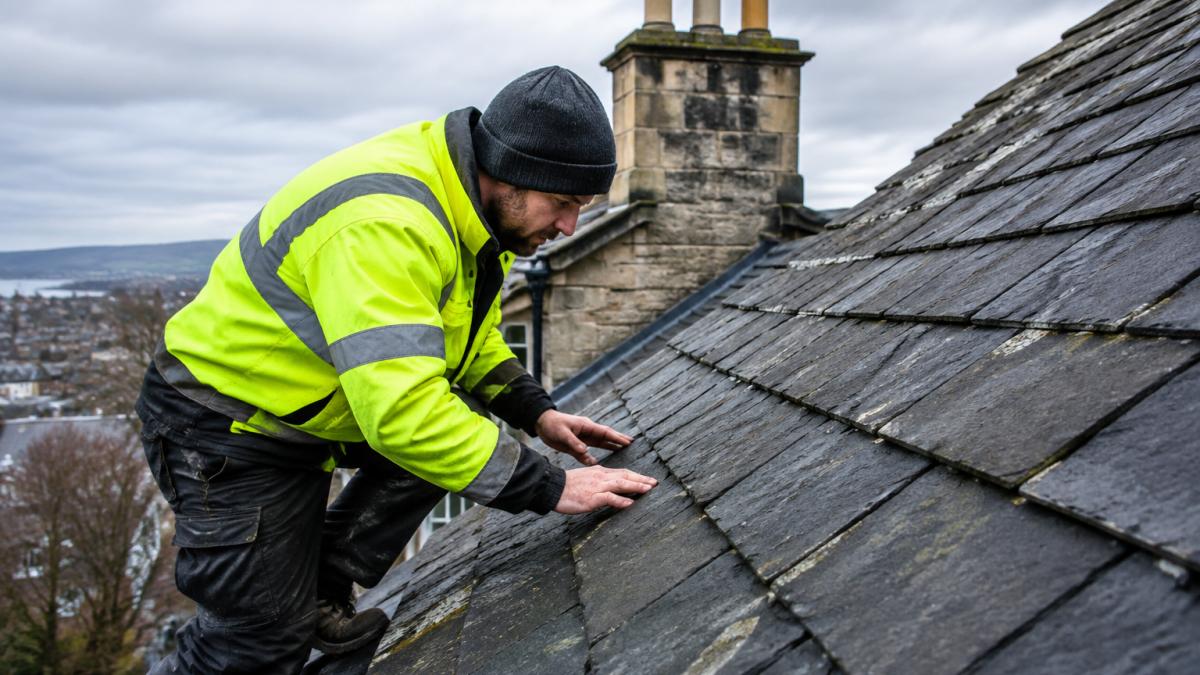
!A roofer in a high-visibility jacket inspecting slate tiles on a pitched roof of a stone house under overcast Scottish skies
How to Find a Roof Leak from Inside Your Home
Start in the loft on a dry day, ideally with a torch. Look for damp or dark patches on the underside of the roof boards, wet insulation, and daylight showing through gaps. Trace any staining upwards toward the roof, since water often runs along a rafter or batten before dropping to a visible spot.
Then check the ceilings below. Note where stains appear and whether they grow after rain. Stains that show up some distance from the actual entry point are common, because water travels before it drips.
If you cannot locate the source, avoid climbing onto the roof yourself. Loose tiles and wet surfaces make falls a real risk. A professional can trace the leak safely, identify the cause and explain the repair options. A clear report also helps if you need to speak to your insurer.
Planned Maintenance vs. Reactive Repairs
The table below compares the two approaches in practical terms.
| Factor | Planned annual maintenance | Reactive emergency repair |
|---|---|---|
| Timing | Scheduled, at a time that suits you | Unplanned, often during bad weather |
| Scope | Small faults caught early | Damage that has already spread |
| Disruption | Minimal | Often significant, including interior damage |
| Budgeting | Predictable and easier to plan | Unpredictable and often urgent |
| Typical outcome | Targeted fixes, longer roof life | Larger repairs, sometimes earlier replacement |
Pricing varies with the size and condition of your roof, the access required and the work identified, so it is best to request a quote for an accurate figure.
Roof Inspection Checklist: What a Professional Checks
A thorough inspection covers the whole roof system rather than just the visible surface. A professional will typically check:
- The roof covering, including slates, tiles and any flat roof membrane, for cracks, slippage and wear
- Flashings and sealants around chimneys, dormers, skylights and walls
- Ridges, hips and verges for movement or open joints
- Gutters, downpipes and outlets for blockages and debris
- Fascias and soffits for rot or damage
- Chimney stacks and brickwork pointing for deterioration
- The loft space for signs of water ingress, insulation damage and ventilation problems
After the inspection, you should receive a written report describing what was found, the priority of each item and the recommended action. Keep these reports together, as they form a useful maintenance record.
Seasonal Maintenance Checks and Material-Specific Care
Different times of year call for different checks, and the needs of your roof depend heavily on its covering. This section gives you a practical seasonal checklist and material-specific guidance you can use between professional visits.
Spring checklist (after winter):
- Check for displaced or cracked tiles and slates after frost and storms.
- Clear gutters and downpipes of debris and check that they are securely fixed.
- Inspect flashings around chimneys and dormers for lifting or cracking.
- Look for moss growth and remove it if it is holding moisture against the covering.
Autumn checklist (before winter):
- Clear leaves and debris from gutters, downpipes and outlets before heavy rain arrives.
- Check that downpipes are secure and free-flowing.
- Look for loose or lifted flashings and sealants that may have aged over summer.
- Arrange a professional inspection if you have not had one in the last year.
Material-specific care:
- Natural slate: durable but fixings can corrode, causing slates to slip. Check nails and battens during any inspection, and replace slipped slates promptly to prevent water tracking.
- Concrete tiles: can crack or shift, especially after storms. Check ridges, hips and verges for open joints and worn mortar.
- Flat roofs and single-ply membranes: sensitive to ponding water. Keep drainage outlets clear and check for blisters, splits or lifted seams.
- Lead flashings: can lift or crack over time. Check joints around chimneys, walls and skylights, and renew sealants as needed.
Watch out: do not walk on a fragile or wet roof to inspect it yourself (Roof work). Slipping from a pitched roof can cause serious injury, so leave access work to trained professionals. A professional can tailor the maintenance plan to your specific roof covering and the seasonal risks in your area.
Booking Your Next Roof Inspection with CJU Roofing Specialists
If your roof has not been inspected in the last year, or if you have noticed any of the signs described above, now is a good time to arrange a check. To see examples of the work we carry out across Edinburgh, East Lothian and Midlothian, take a look at our completed projects. A roof inspection is also the best way to find out what condition your roof is really in, and what a roof inspection includes can help you prepare questions before the visit.
Before the visit, it helps to note any recent storms, drips, stains or changes you have seen, so the inspector knows where to focus. If you suspect a leak, our guide on how to spot and trace a roof leak explains what to look for, and our roof water damage prevention steps cover the routine checks you can carry out between visits. Spotting hidden leaks early is also worth reading about, particularly if you have had damp patches without an obvious cause, as covered in how to spot signs of hidden roof leaks.
Contact CJU Roofing Specialists through cjuroofingspecialists.co.uk to enquire about an inspection, repair or planned maintenance plan, and we will advise on the right next step for your home.
Frequently Asked Questions
How often should a roof be professionally inspected?
Most homeowners benefit from a professional roof inspection once a year, ideally in spring or autumn. Annual checks catch problems such as slipped slates, failed flashing, blocked gutters and worn sealant before they cause internal damage. Inspections after severe storms are also worthwhile, even if the roof was checked recently. Pricing varies with roof size and condition, so request a quote from CJU Roofing Specialists for an accurate figure for your property.
What does an annual roof maintenance check include?
A thorough annual check looks at the whole roof covering, including slates or tiles, ridges, valleys, flashing, leadwork and chimney stacks. The inspector also examines gutters, fascias and soffits for debris and rot, and checks loft spaces for signs of moisture or poor ventilation. A good inspection will identify minor faults early, so that small repairs can be scheduled before they turn into full replacements. Ask for a written report so you can track the condition of your roof over time.
Can regular roof maintenance prevent leaks?
Regular maintenance is one of the most effective ways to prevent leaks. Most leaks start at weak points such as flashing, valleys and around chimneys, where small gaps let water track in unnoticed. Clearing gutters and replacing damaged sealant or slates removes the most common routes for water entry. Maintenance cannot stop every leak, especially after extreme weather, but it greatly reduces the chance of water reaching your ceilings and insulation.
Is it worth paying for an annual roof maintenance plan?
For most homeowners, a maintenance plan is worth considering because it turns unpredictable emergency repairs into planned work. Reactive repairs after a storm or leak are usually more disruptive and can cost considerably more than catching the same fault early. A plan also keeps a dated record of your roof's condition, which can be useful when dealing with insurers or selling the property. Speak to CJU Roofing Specialists about what a plan would cover for your home.