 blog
Are Roof Repair Options for Older Edinburgh Homes Worth It?
Last Updated: November 15, 2026
Quick Summary
Roof repair on an older Edinburgh home is worth it when the structure is sound and failures are local, such as cracked slates or failed chimney flashing. The best roof repair matches the original slate, lead and lime mortar rather than covering them over, and replacement only wins when the felt or sarking has perished.
- Older roofs were built to breathe, so sealing them with modern cement or spray coatings traps damp inside.
- Blocked guttering often reads as a roof leak but is really a drainage problem.
- Repair wins when rafters and sarking are sound and failures are isolated.
- Perished felt across the roof or a sagging roofline points towards replacement.
- Photograph storm damage before repairing so you can evidence an insurance claim.
Table of Contents
- Roof Repair Options for Older Edinburgh Homes: What Actually Works
- Common Causes of Roof Leaks in Older Properties
- Slate Roof Repair: Matching Materials on Period Properties
- Roof Repair or Replacement: How to Decide
- Your Roof Inspection Checklist Before You Commit
- Conservation Areas, Insurance Claims and Material Sustainability
- Requesting a Roof Survey and Quote from CJU Roofing Specialists
- Frequently Asked Questions
This guide from CJU Roofing Specialists covers the roof repair options for older Edinburgh homes review, and it opens with a simple truth: period properties fail in ways modern roofs do not. If you own a tenement flat or a stone-built villa, you are dealing with slate matching, leadwork and lime mortar, not concrete tiles and plastic vents. For enquiries, contact CJU Roofing Specialists directly.
Roof Repair Options for Older Edinburgh Homes: What Actually Works
Roof repair on an older property is the process of restoring a failing roof covering, its waterproofing details and its supporting structure using materials that match the original build. The best roof repair for a period home is one that matches the existing slate, lead and mortar rather than covering them over.
That distinction matters more than most homeowners realise. A patch that looks fine on a modern new-build can trap water against a stone wall for years.
Why period properties need a different approach
Older roofs were built to breathe. Lime mortar pointing, felt underlay and overlapping slate courses all allow moisture to move and escape. Seal them with modern cement or a spray coating and you trap damp inside the structure.
The other issue is weight and pitch. Tenement roofs and steep period pitches were designed around natural slate, and swapping in heavier or lighter materials changes how the roof behaves under wind and rain. Weatherproofing a period roof means working with its original logic, not against it.
Common Causes of Roof Leaks in Older Properties
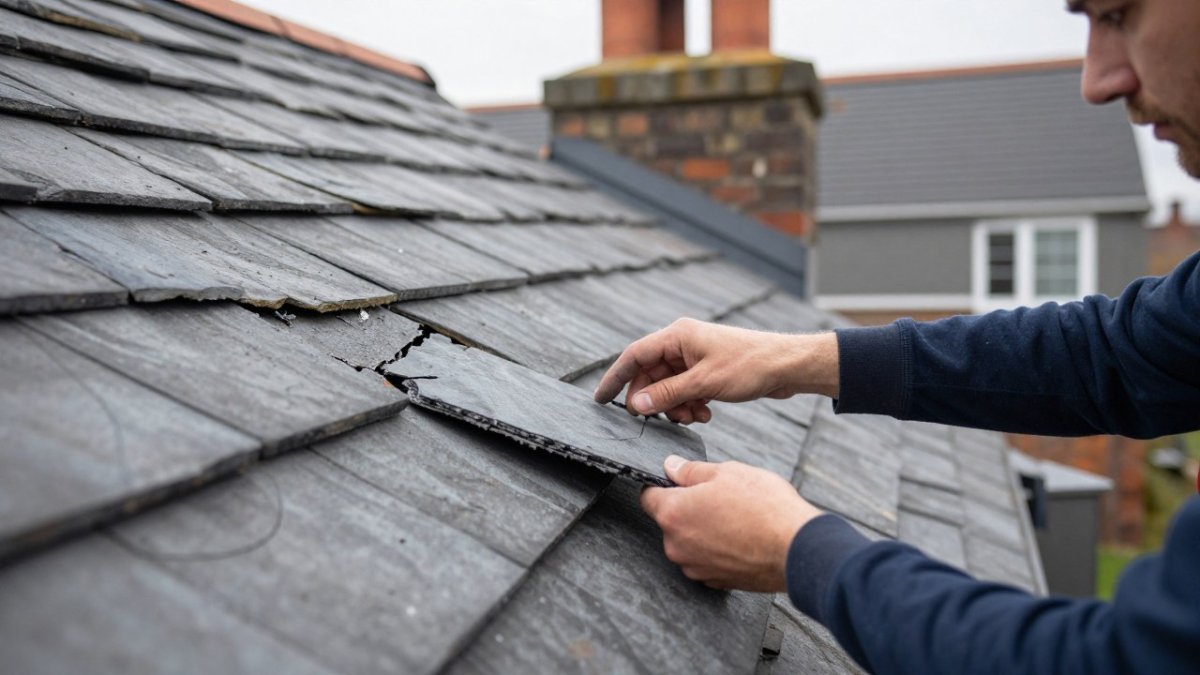
Water ingress in an older home almost always traces back to one of a small number of failures. Cracked slates and missing tiles top the list, usually after storm damage or simple age. A single slipped slate lets water onto the felt, and from there it travels sideways before it appears as a damp patch well away from the actual gap.
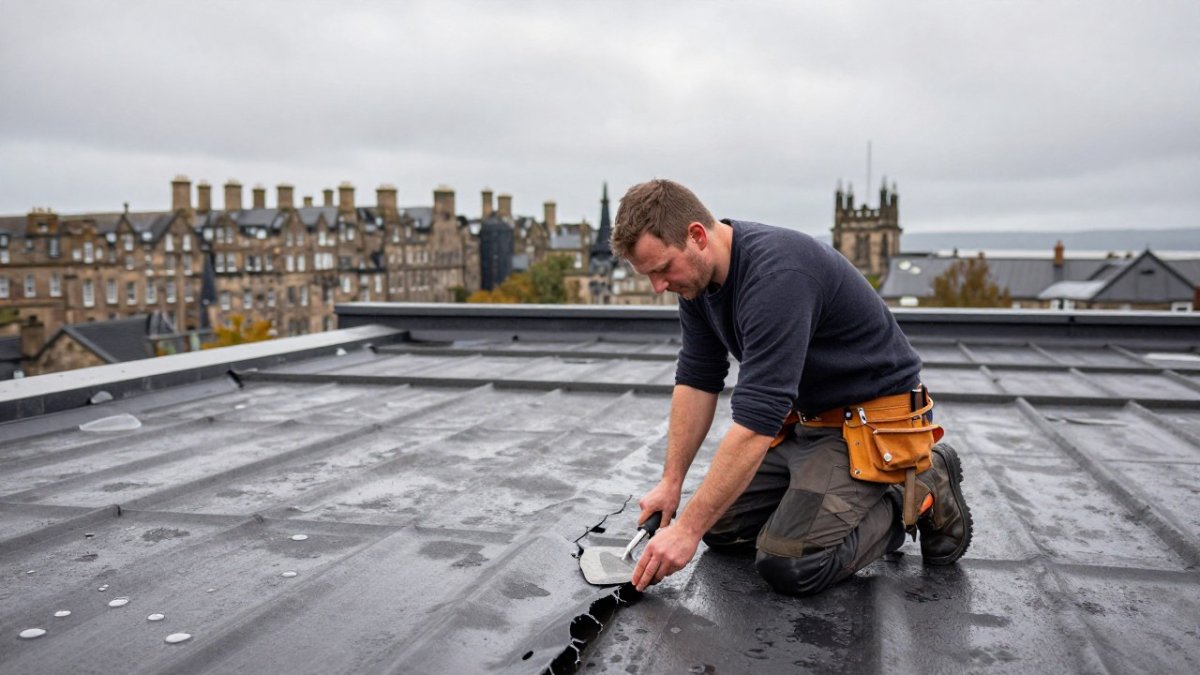
Flashing and leadwork come next. The mortar around a chimney stack cracks over time, and the lead apron behind it can split at a fold. Roof valleys, where two pitches meet, collect debris and wear faster than the rest of the roof.
Guttering and downpipes cause more "leaks" than people expect. Blocked guttering sends water back under the eaves and down the wall, which reads as a roof leak but is really a drainage problem. If your roof is older than its expected lifespan, the felt underlay itself may have perished, and no amount of slate replacement will fix that.
Slate Roof Repair: Matching Materials on Period Properties
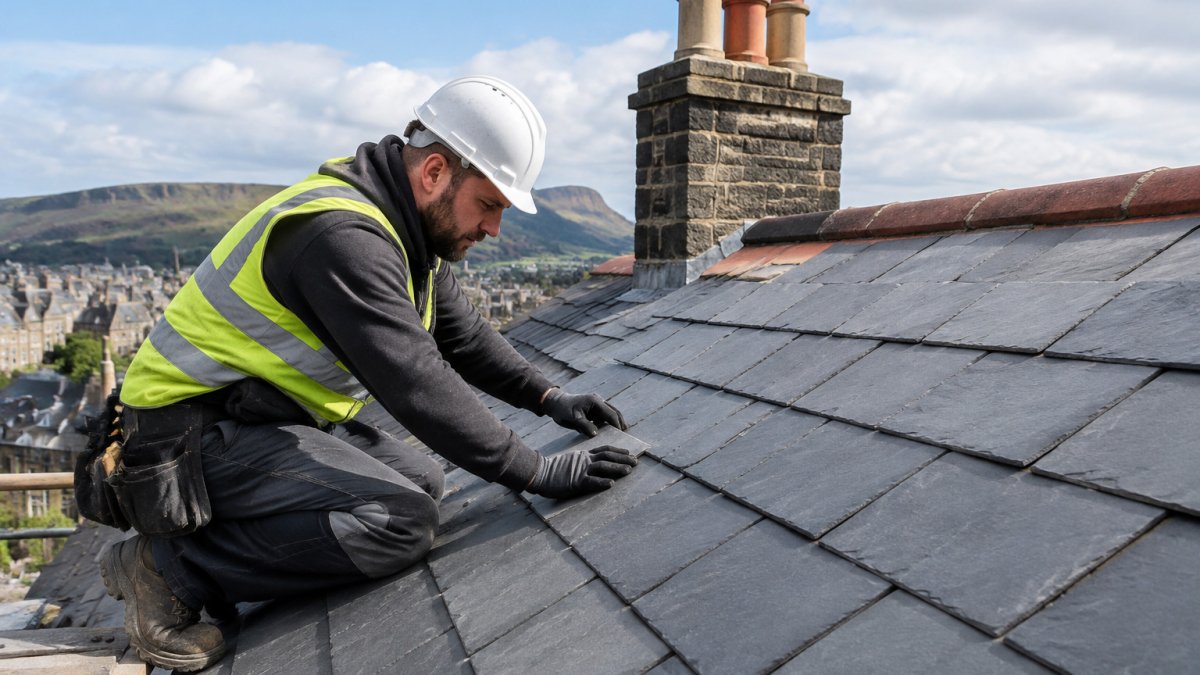
The single biggest mistake on a period roof is mismatched slate. Original Scottish slate has a different thickness, colour and weathering pattern to imported replacements, and a bright new slate on a weathered roof stands out immediately.
Good slate roof repair starts with identifying what is already there.
Leadwork, flashing and chimney stacks
Leadwork is where older roofs live or die.
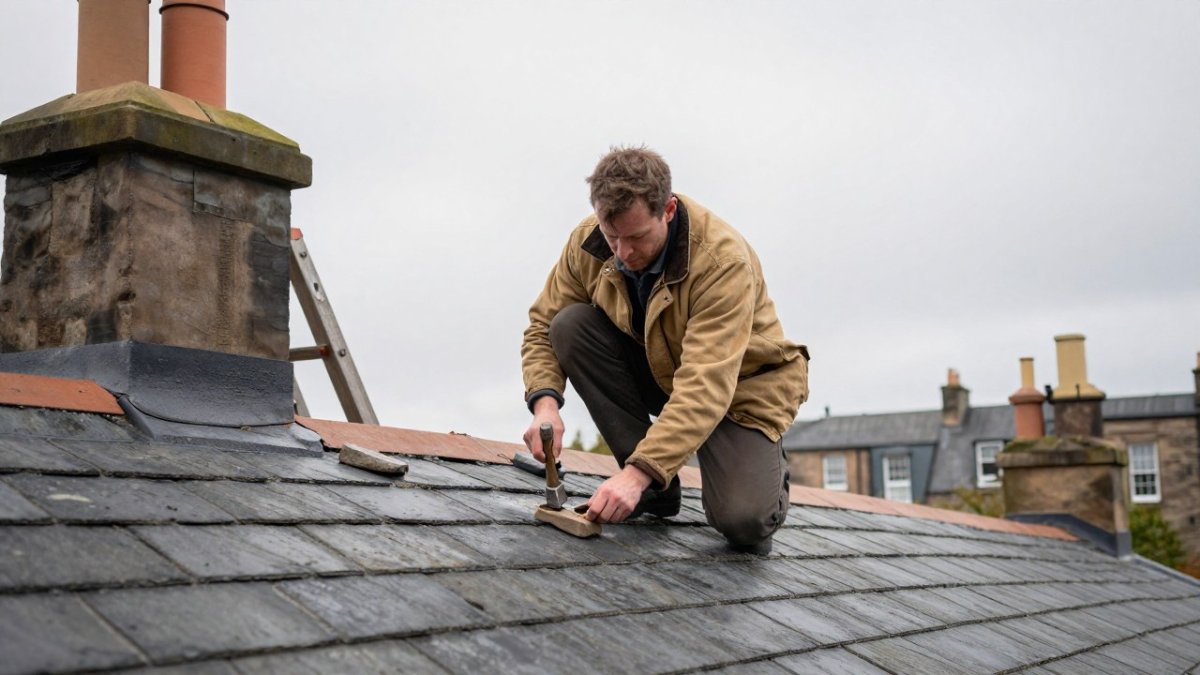
Chimney stacks deserve their own inspection. Cracked masonry, failed pointing and a missing pot all let water in, and the stack is often the highest and most exposed part of the roof.
Roof Repair or Replacement: How to Decide
The honest answer is that repair wins when the structure is sound and the failures are local. Replacement wins when the roof has reached the end of its life as a system: perished felt, widespread slate failure, or a sagging roofline that points to structural movement. The difficult cases sit in between, and that is where most owners of older properties actually are.
Work through these questions before you commit:
- Are the rafters and sarking sound, or is there movement and rot?
- Is the felt underlay perished across the whole roof, or only in isolated bays?
- Are failures isolated, or is slate after slate going?
- Has the roof already been patched repeatedly over several years?
- Is the roof shared with neighbours, and who else has a say?
Reading the structure, not just the covering
On a period roof the covering is only the top layer. Below the slate sits the sarking, usually timber boards, and below that the rafters. On many older properties there is no felt underlay at all, or a felt that has long since perished. If the sarking is sound and dry, individual slate repairs will hold. If the sarking is soft, stained or showing rot, replacing slates is cosmetic work over a failing deck.
A common pattern is a roof that sheds water fine in calm weather but leaks in driving rain because the felt has gone and the slate alone cannot cope with wind-driven water. That is a system failure, not a slate failure, and it points towards replacement or a full strip and re-cover rather than another patch.
Phasing work on tenements and large roofs
Not every owner can authorise a full replacement in one go, and on tenement properties the roof is usually shared. A sensible approach is to phase work: fix the active leaks and failed leadwork first, then plan the full re-cover with the other owners.
| Situation | Better Option | Why |
|---|---|---|
| A few cracked or slipped slates | Repair | Localised failure, structure sound |
| Failed flashing at a chimney | Repair | Detail-level fix, roof otherwise healthy |
| Perished felt across the roof | Replacement | The waterproofing layer has gone |
| Sagging roofline or movement | Replacement | Structural integrity is compromised |
| Repeated patches over years | Replacement | Cost of ongoing repair outweighs renewal |
| Shared tenement roof, mixed condition | Phased repair then plan | Keeps building watertight while owners agree scope |
If you are weighing up the costs of different repairs, it helps to compare roof repair costs by repair type before you decide. And if you are unsure whether the roof has simply reached the end of its lifespan, this guide on when to replace an old roof walks through the warning signs and typical lifespans.
Your Roof Inspection Checklist Before You Commit
A proper roof inspection is a structured survey, not a glance from the pavement. Before you accept any quote, make sure the roofer has checked the following, and ask to see photos of anything they flag.
- Slate and tile condition, including cracked and slipped units
- Flashing and leadwork at chimneys, valleys and abutments
- Chimney stack masonry, pointing and pots
- Guttering, downpipes and drainage flow
- Ridge tiles and hip tiles for movement
- Felt underlay condition where visible
- Rafter and sarking condition inside the loft
- Ventilation and any signs of condensation
- Damp patches and water ingress on internal walls
A common mistake is accepting a quote that lists a price but no findings. If a roofer cannot tell you exactly what is wrong and where, the quote is guesswork. It also helps to know what a professional residential roof inspection actually covers, so you can tell a thorough survey from a quick look.
Conservation Areas, Insurance Claims and Material Sustainability
These three topics are where older properties differ most from modern ones, and they are the areas most guides skip. Getting them right protects both the building and your wallet.
Conservation areas and roof alterations
Many older properties sit within conservation areas, where roof alterations need permission and materials must match the original character (Carrying out works in a conservation area | Conservation areas). Before you authorise any work, check with the local planning authority whether a repair needs consent.
Before you authorise any work, check with the local planning authority whether the property is in a conservation area and whether the proposed work is considered an alteration. Keeping the original slate, lead and lime mortar is both the heritage-friendly choice and the simplest route through the rules.
Documenting storm damage for an insurance claim
If you are claiming on insurance after storm damage, the burden is on you to show the damage is storm-related rather than wear and tear.
Collect the following before you call your insurer:
- Dated photographs of the damage from ground level and, if safe, from inside the loft
- Any photos taken before the storm that show the roof in good condition
- A written inspection report from a roofer describing the damage and its likely cause
- Written repair estimates, ideally more than one
- Receipts for any emergency work, such as temporary sheeting
A common pattern is an owner who patches the roof first and photographs later, by which point the evidence of storm causation has gone. Photograph before you repair wherever it is safe to do so. Our guide on roof insurance claim evidence explains exactly what to collect before you call your insurer.
Reclaimed slate versus modern alternatives
On sustainability, the greenest option is usually the least dramatic one. Repairing and reusing existing slate keeps material out of landfill and preserves the roof's original performance.
Where replacement is unavoidable, matching natural slate and lead remains the most durable and repairable choice over the long term. Natural slate can last many decades and individual slates can be replaced as they fail. Modern synthetic slates are lighter and cheaper to buy, but they weather differently, can fade, and are less repairable. On a period property the visual mismatch is usually obvious from the street, which matters in a conservation area.
Requesting a Roof Survey and Quote from CJU Roofing Specialists
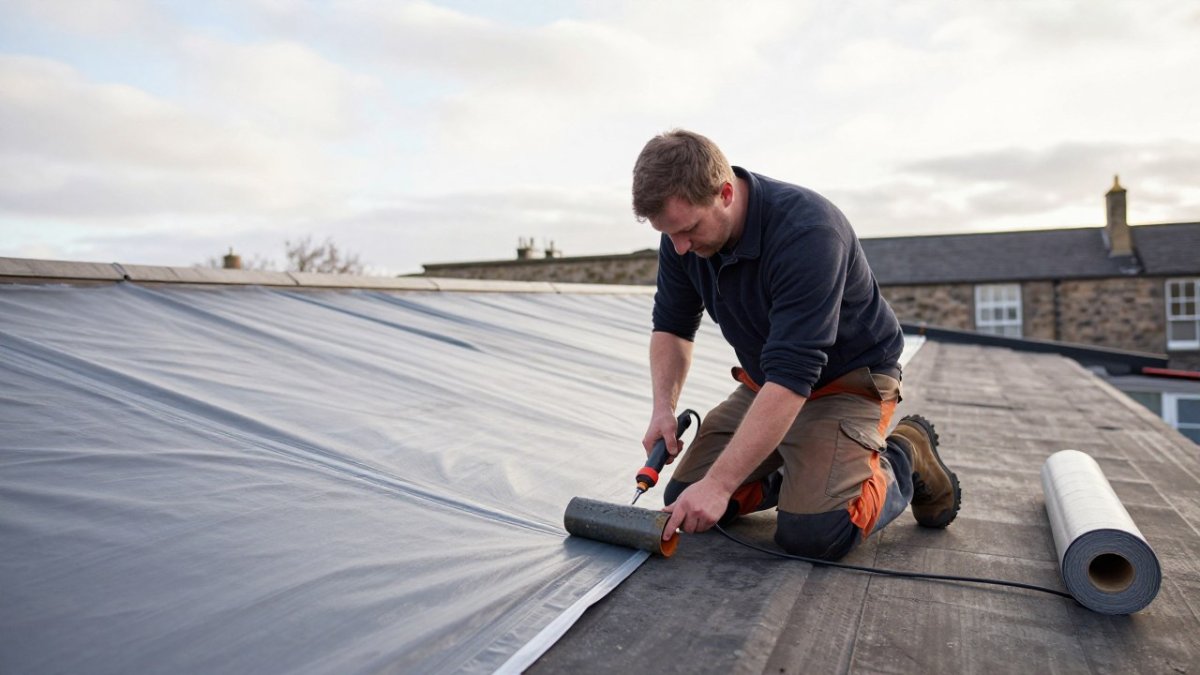
Storm damage, an active leak or a roof that is simply past its best all call for the same next step: a proper survey from a qualified roofer who works on period properties. At CJU Roofing Specialists, we handle roof slating and tiling, flat roofing and single ply systems, leadwork, chimney repairs, brickwork pointing, fascias, soffits and guttering, plus full roof replacements. We use quality materials such as CUPA Heavy 3 Spanish slates and Code 5 leadwork, and full roof replacements come with a 5-year workmanship guarantee.
If you are ready to move from guesswork to a clear plan, get in touch with our team to arrange a survey and a written quote. We cover Edinburgh, East Lothian and Midlothian, and we will tell you plainly whether a repair will do the job or whether replacement is the honest answer.
A roof that has been patched three times in as many years is telling you something. The challenge is knowing when to stop repairing and start planning a renewal, and that decision is far easier with a proper survey behind it. CJU Roofing Specialists offers roof renewal and repair services, including slate and lead repairs, chimney work, guttering and complete roof replacements, and full roof replacements come with a 5-year workmanship guarantee. Get started with CJU Roofing Specialists for a straight answer on your roof.
Frequently Asked Questions
What are the common causes of roof leaks in older homes?
The usual culprits are cracked or missing slates, failed lead flashing around chimneys and roof valleys, worn mortar at ridge tiles, and blocked guttering that pushes water back under the eaves. Ageing felt underlay and loose fixings also let water through during driving rain. On period properties, small defects often go unnoticed until water ingress shows as damp patches on ceilings, so a proper roof inspection is the fastest way to find the real source before it spreads.
Is it better to repair or replace an old slate roof?
It depends on how widespread the problem is. Isolated cracked slates, a failed section of flashing or a single leaky valley are usually worth repairing, and slate roof repair can keep a sound roof going for years. If slates are failing across the whole pitch, the roofline is sagging, or the felt underlay has perished, replacement often works out cheaper over time. A professional survey should give you an honest view of both options rather than pushing one.
Can damaged lead flashing cause a roof leak?
Yes, and it is one of the most common causes of water ingress on older properties. Lead flashing seals the junctions where the roof meets chimney stacks, walls and valleys, and it can split, lift or corrode over decades. Water then tracks down masonry and appears as damp patches well away from the actual defect. Replacing or repairing the leadwork, often with Code 5 lead, restores the weatherproofing without touching the surrounding slates.
What should a roof inspection checklist include?
A thorough roof inspection checklist should cover cracked or missing tiles and slates, the condition of ridge tiles and mortar, leadwork and flashing at chimneys and valleys, guttering and downpipes, roof ventilation, and any signs of sagging or water ingress internally. It should also note the roof pitch, felt underlay condition and masonry repairs needed. Ask for the findings in writing with photographs, which is also useful evidence if you later make an insurance claim for storm damage.